
A Crummy Cake Complaint Uncovers Massive “Ghost Vendor” Food Delivery Scam in China
A customer complaint over a poorly made birthday cake in Beijing has exposed a vast underground network of fake food vendors operating across China’s booming food delivery industry.
The incident began when a customer, identified as Liu, ordered a cake online and received a product with an inedible decoration. Dissatisfied, he reported the vendor to local authorities. That single complaint triggered a nationwide investigation that uncovered a far larger problem than expected.
Thousands of Fake Vendors Exposed
Regulators discovered a fraudulent cake business chain with nearly 400 listed locations, none of which had real storefronts. This led to a broader investigation that ultimately uncovered more than 67,000 so-called “ghost vendors” who collectively sold over 3.6 million food items.
According to state media reports, these vendors operated through a hidden system where customer orders were resold to third-party producers via bidding platforms. The lowest bidder would fulfill the order, often cutting costs by sacrificing food quality and safety.
Major Platforms Penalized
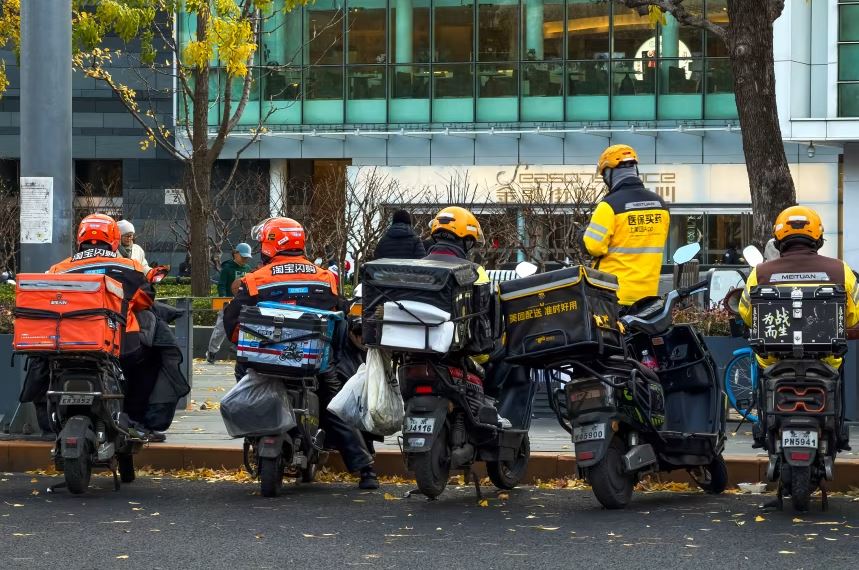
China’s State Administration for Market Regulation concluded that several major delivery platforms — including those operated by PDD Holdings, Alibaba, ByteDance’s Douyin, Meituan, and JD.com — failed to properly verify vendors or protect consumers.
Authorities imposed a record fine of 3.6 billion yuan (approximately $528 million), marking the largest penalty under China’s food safety law revisions since 2015.
“Industrialized” Illegal System
Officials described the system as a large-scale, industrialized form of illegal activity.
In one example, a cake purchased for 252 yuan was resold through multiple layers of intermediaries, with vendors bidding progressively lower prices to fulfill the order. While platforms and intermediaries earned fees, actual food producers were left with minimal profit margins.
“This is not a minor violation, but a fully industrialized illegal system,” a market regulator official told state media.
Crackdown on Price Wars
The investigation highlights China’s broader struggle with aggressive price competition in its tech and delivery sectors, a phenomenon known locally as “involution.” Companies often compete by cutting prices, which can reduce quality and profitability.
Beijing has launched an “anti-involution” campaign to curb such practices, warning that destructive price wars are harming both businesses and consumers.
Resistance During Investigation
State reports also described instances of resistance during the probe, including employees allegedly obstructing officials and withholding information.
Despite this, major platforms have said they will comply with penalties and strengthen internal oversight systems.