
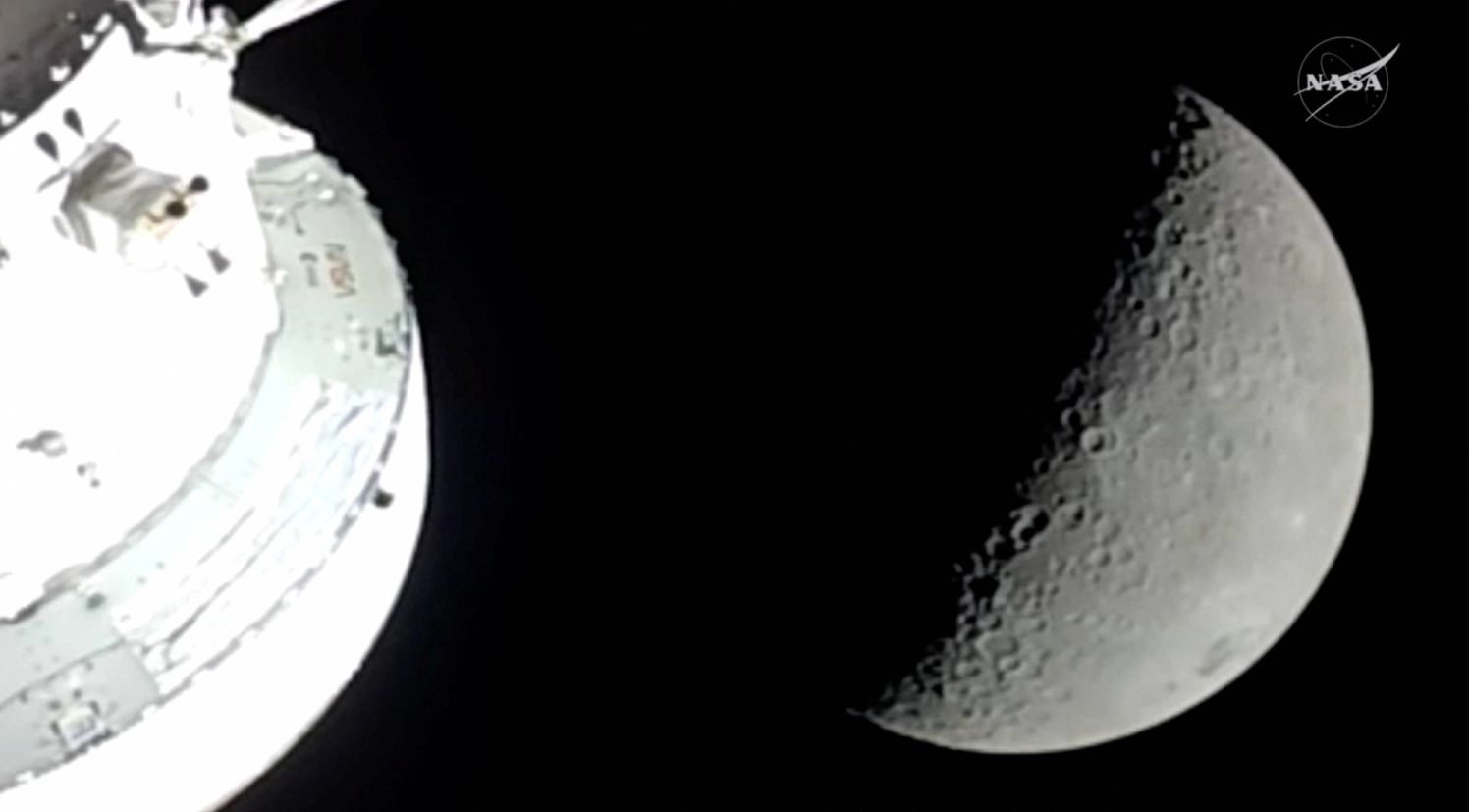

Artemis II Astronauts Travel Farthest Ever, Capture Historic Views of Moon’s Far Side
Astronauts aboard Artemis II have achieved a historic milestone, traveling farther from Earth than any humans before, as they conducted a rare flyby of the Moon’s far side.
The four-member crew — Reid Wiseman, Victor Glover, Christina Koch, and Canadian astronaut Jeremy Hansen — reached a record distance of approximately 252,756 miles (402,000 kilometers) from Earth during their mission. This surpasses the previous record set during the Apollo 13 mission in 1970.
The astronauts spent nearly six hours surveying the Moon’s far side, a region never visible from Earth. During this time, they observed meteor “impact flashes” striking the lunar surface — a phenomenon rarely witnessed directly by humans. Scientists at NASA Johnson Space Center monitored and recorded these observations in real time.
The flyby brought the Orion spacecraft within about 4,070 miles of the lunar surface. The mission marks the first crewed journey to the Moon’s vicinity since the Apollo program concluded in 1972.
As the spacecraft passed behind the Moon, the crew experienced a 40-minute communications blackout due to obstruction from Earth-based antennas. Despite the temporary loss of contact, the mission proceeded smoothly.
During the journey, the astronauts also captured rare images of Earth rising and setting over the Moon’s horizon — a striking reversal of the familiar lunar view from Earth. The crew described the experience as one of the most unforgettable moments of the mission.
In a symbolic gesture, the astronauts proposed names for previously unnamed lunar features, including one crater suggested in memory of Commander Wiseman’s late wife.
The mission is part of NASA’s broader Artemis programme, which aims to return humans to the lunar surface and establish a sustainable presence on the Moon. Future missions are expected to pave the way for long-term exploration, including potential human missions to Mars.
Officials say data collected during Artemis II will play a critical role in planning upcoming missions, including a future lunar landing targeted later this decade.