
Global Markets – April 2026: Oil prices dropped sharply and global stock markets rallied after Donald Trump announced a two-week ceasefire agreement with Iran, easing fears of a prolonged conflict that had disrupted global energy supplies.
The immediate reaction across financial markets highlighted investor relief following weeks of uncertainty triggered by escalating tensions in the Middle East and the effective disruption of oil flows through the strategically vital Strait of Hormuz.
Sharp Decline in Oil Prices
U.S. crude futures plunged more than 15% in after-hours trading, falling below $95 per barrel — one of the steepest single-day declines in recent years. Brent crude, the global benchmark, also dropped significantly, declining 13.75% to $94.68 per barrel.
Despite the sharp fall, prices remain elevated compared to pre-conflict levels, when oil was trading around $67 per barrel before the outbreak of hostilities in late February.
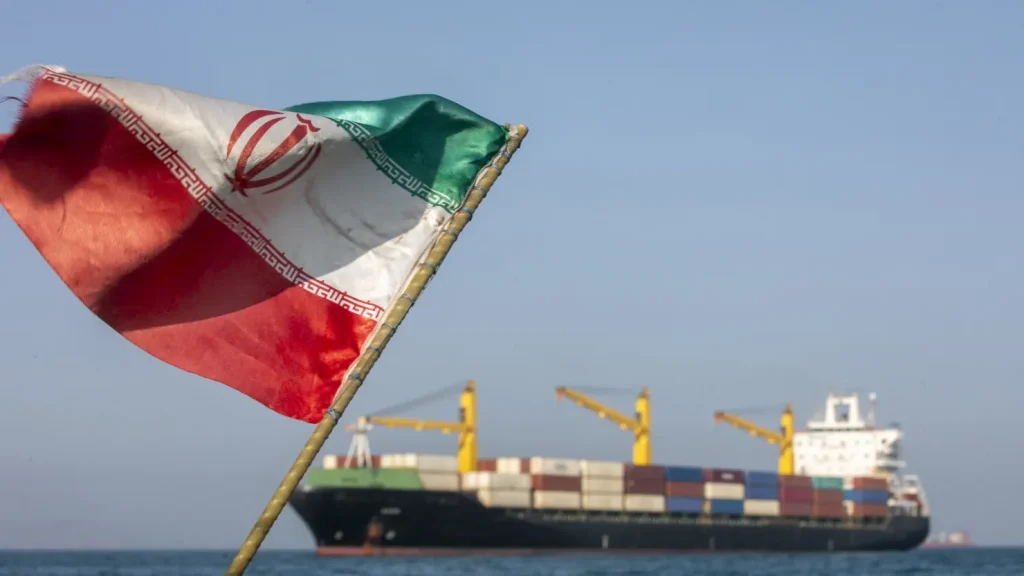
The earlier surge had been driven by fears of a major supply shock, as the Strait of Hormuz — a critical maritime chokepoint — handles roughly 20% of the world’s oil supply. The partial blockade of the strait during the conflict had severely disrupted global energy flows.
Stocks Rally Across the Globe
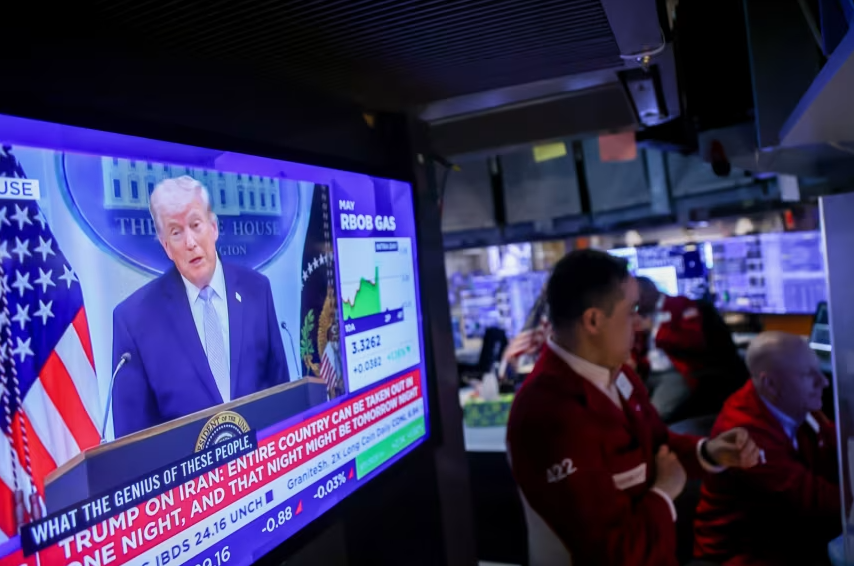
Equity markets responded positively to the ceasefire announcement. U.S. stock futures surged, with the Dow Jones Industrial Average futures rising over 1,000 points (2.2%), while S&P 500 futures gained 2.4% and Nasdaq futures jumped around 3%.
Asian markets also posted strong gains. Japan’s Nikkei 225 rose by 5.4%, South Korea’s Kospi climbed 6.9%, and Hong Kong’s Hang Seng Index advanced 2.8%, reflecting renewed investor confidence.
Market analysts said the reaction signaled optimism that the worst of the geopolitical crisis may be over — at least temporarily.
“Investors would like to get the Strait of Hormuz open and this conflict behind them,” said Art Hogan, chief market strategist at B. Riley Financial.
Uncertainty Over Strait of Hormuz
Despite the market rally, significant uncertainty remains around the future of the Strait of Hormuz. Analysts caution that the ceasefire has not yet clarified whether shipping routes will fully reopen or how Iran intends to manage passage through the waterway.
Iran has indicated that while it will observe the ceasefire, it still intends to maintain control over the strait and may impose fees on vessels passing through — a move that could create new tensions with the United States and its allies.
“That’s the whole ball of wax,” said Bob McNally of Rapidan Energy Group. “So far Washington and Tehran seem to be talking past each other on that.”
Any prolonged restrictions or new conditions on transit could continue to disrupt global supply chains and keep energy markets volatile.
Massive Supply Disruption
The conflict has already caused what analysts describe as one of the largest oil supply shocks on record, affecting an estimated 12 to 15 million barrels per day.
As of Tuesday, approximately 187 oil tankers carrying crude and refined products remained stranded in the Gulf region, awaiting clarity on safe passage through the strait. The movement of these shipments will be a key indicator of whether the ceasefire translates into real economic relief.
Temporary Relief, Long-Term Questions
While the ceasefire has brought immediate relief to markets, experts warn that the situation remains fragile. The agreement is temporary, and negotiations over a permanent settlement are expected to be complex.
Iran has emphasized that the ceasefire does not signal the end of the war, while the United States has tied the agreement to the reopening of the Strait of Hormuz.
Analysts also note that Iran’s ability to disrupt global energy markets has reinforced its geopolitical leverage.
“Iran has demonstrated its capacity for bringing global oil and gas markets to their knees,” said Karl Schamotta of Corpay Currency Research.
Outlook
In the short term, financial markets are likely to remain highly sensitive to developments in the Middle East. Any progress toward reopening the Strait of Hormuz could stabilize oil prices further and support global economic recovery.
However, if negotiations falter or tensions resurface, volatility could quickly return. For now, investors are cautiously optimistic — but the path to lasting stability remains uncertain.