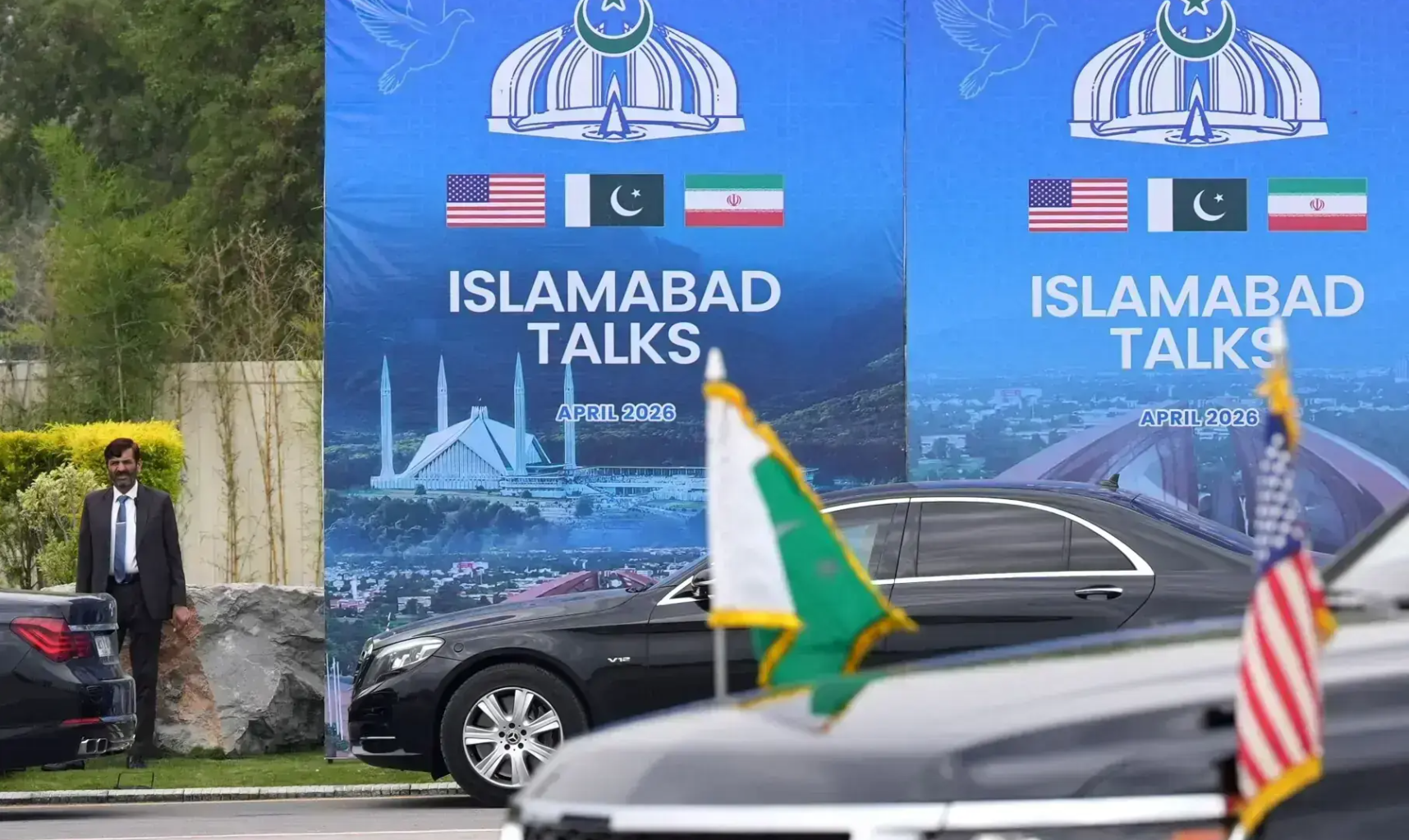

Negotiating teams from the United States and Iran may return to Islamabad later this week for a second round of peace talks, multiple diplomatic sources confirmed on Tuesday, following an initial round of discussions that ended without a breakthrough but also without a collapse.
The first round of talks, hosted in Islamabad over the weekend, marked the highest-level direct engagement between Washington and Tehran in decades. Both delegations departed the capital on Sunday after discussions concluded without an agreement, though officials described the atmosphere as constructive enough to continue dialogue.
According to sources cited by Reuters and AFP, preparations are now underway for a possible second round, with both sides reportedly keeping their schedules open between Friday and Sunday.
A senior Iranian source said no firm date has been finalised but confirmed that the possibility of resuming talks at the end of the week remains open. Pakistani officials also indicated that communication is ongoing with both sides to coordinate timing and logistics for the next session.
🇵🇰 Pakistan’s Mediating Role Expands
Pakistan has emerged as a central facilitator in the ongoing diplomatic efforts, working closely with both sides to keep negotiations alive and extend the fragile ceasefire framework agreed earlier this month.
Officials said Islamabad is also pushing for an extension of the ceasefire beyond its current April 22 deadline to allow more time for structured negotiations and confidence-building measures.
Prime Minister Shehbaz Sharif told the federal cabinet that “full efforts” are underway to resolve outstanding issues, stressing that diplomatic engagement remains the only viable path forward.
⚖️ Ongoing Diplomatic Efforts
Diplomatic sources say intermediaries from Pakistan, supported by regional partners including Türkiye and Egypt, are actively exchanging messages between Tehran and Washington to narrow differences and prepare the groundwork for a second round of talks.
The United States delegation, however, has reportedly taken a firmer position on several core issues, including verification mechanisms related to Iran’s nuclear programme.
US Vice President JD Vance reiterated that “the ball is in Iran’s court,” stating that Washington has already presented what it considers its “final and best offer.”
Meanwhile, US President Donald Trump claimed that Iranian officials had reached out following the first round of negotiations, suggesting continued interest in reaching a deal.
🇮🇷 Iran’s Position
Iranian officials have accused Washington of maintaining “excessive demands” during negotiations, but have not ruled out further dialogue.
Iranian President Masoud Pezeshkian said Tehran remains committed to talks within the framework of international law and emphasized adherence to ceasefire terms, according to Iranian state media.
🌍 Ceasefire Under Pressure
The current ceasefire, brokered earlier this month, remains in place but is described as increasingly fragile. Diplomatic sources warn that without progress, tensions could escalate again.
Negotiators are also exploring options to extend the truce by up to 45 days to allow time for deeper technical discussions
🔎 Outlook
While differences remain over agenda, format, and venue for future talks, officials say the willingness of both sides to remain engaged is seen as a positive sign.
A second round of talks in Islamabad is now seen as a critical opportunity to prevent renewed escalation and build a pathway toward longer-term stability in the region.