

The far-right Alternative for Deutschland (AfD) has unveiled a hardline political manifesto ahead of upcoming state elections in Saxony-Anhalt, outlining sweeping changes in migration, education, welfare, and energy policy that critics describe as highly radical.
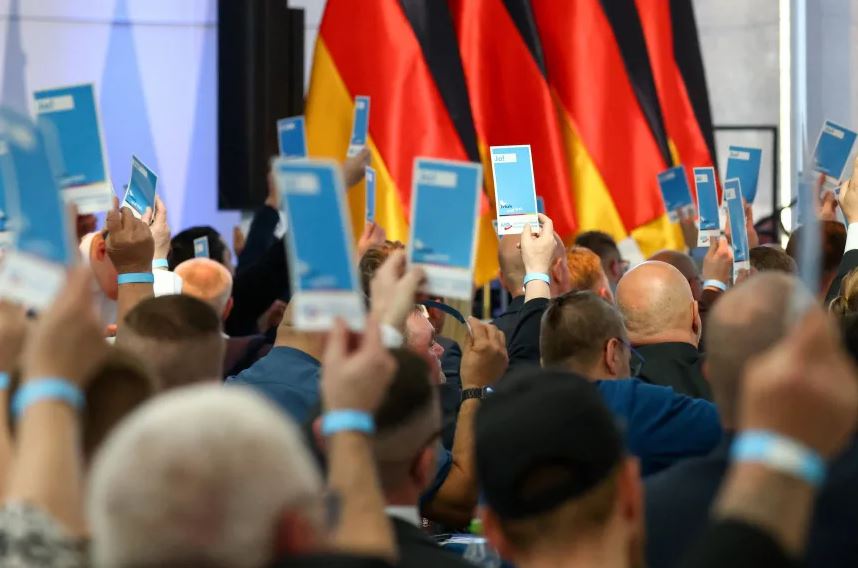
At a recent party congress in the city of Magdeburg, AfD leaders presented a 150-page draft program that calls for a “complete 180-degree turn” in Germany’s migration approach. Central to the plan is the controversial concept of “remigration,” which includes large-scale deportations and stricter controls on refugees, including Ukrainian nationals who fled the ongoing war.
Leading AfD candidate Ulrich Siegmund addressed around 250 delegates, calling for “consistent deportations” and framing the upcoming election as a historic opportunity for the party to gain its first outright majority in the region.
The AfD has steadily increased its influence in eastern Germany, particularly in former East German states where economic disparities with the western regions remain a long-standing political issue. Analysts say this divide has contributed significantly to voter dissatisfaction with mainstream parties.
Recent polling suggests the AfD’s popularity in Saxony-Anhalt is nearing 40%, placing it well ahead of traditional parties such as the Christian Democratic Union (CDU) and the Social Democratic Party (SPD). The party has already made strong gains in several regional elections, signaling growing national momentum.
Beyond domestic policy, the manifesto has also sparked controversy for its foreign policy stance. It calls for a reassessment of Germany’s relationship with Russia, including the lifting of sanctions and the introduction of Russian language education programs. This position sharply contrasts with Germany’s official policy under the federal government in Berlin, which has strongly supported Ukraine amid the ongoing war.
Critics argue that the AfD’s positions represent a significant shift away from Germany’s post-war political consensus, particularly on issues of immigration and European integration. The party’s “Vision 2026” campaign is seen as an effort to capitalize on public concerns over migration, identity, and economic pressure.
Supporters, however, claim the party is responding to voter frustration with existing policies and rising social tensions, particularly following high-profile incidents involving migrants in recent years.
The upcoming election in Saxony-Anhalt is being closely watched across Europe, as it may serve as a key indicator of the strength of nationalist movements following mixed results for similar parties in other countries.