
China’s Economy Shows Strong Start Amid Global Turmoil
China’s economy has posted stronger-than-expected growth in the first quarter of the year, signaling resilience despite escalating global uncertainty triggered by the ongoing conflict involving Iran.
According to the National Bureau of Statistics of China, the country’s Gross Domestic Product (GDP) grew by 5.0% year-on-year in the first quarter — an acceleration from 4.5% recorded in the previous quarter.
Officials described the performance as a “solid start” to the year, but cautioned that both domestic and international challenges remain.
Exports Power Economic Growth
A major driver behind the growth has been China’s export sector, particularly electrical and mechanical goods.
Despite geopolitical disruptions, exports remained robust:
- Overall exports rose 14.7% in the first quarter
- High-tech and green sectors saw significant gains
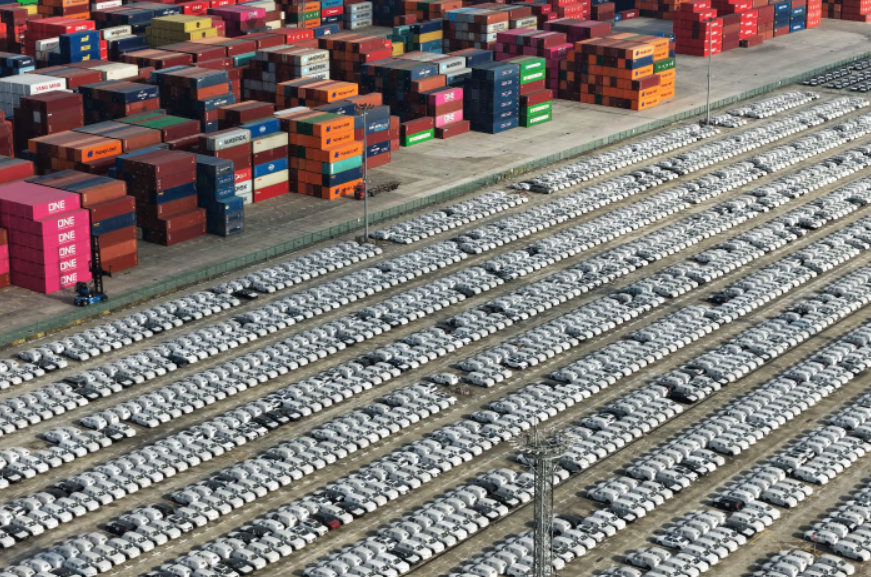
- Electric vehicle exports surged by 78%
- Lithium batteries and wind turbine components also saw sharp increases
China’s focus on advanced manufacturing and green technology has helped cushion the impact of rising global energy prices.
Impact of the Iran War Emerging
The conflict involving Iran, which escalated in late February, has begun affecting global trade flows and energy markets.
Key impacts include:
- Rising oil prices increasing production costs
- Higher logistics and shipping expenses
- Slowing global demand
China, while relatively insulated due to diversified energy supplies and stockpiles, remains vulnerable due to its heavy reliance on exports.
Export growth, for instance, dropped sharply from 21.8% in the first two months to just 2.5% in March, highlighting early signs of pressure.
Weak Consumer Demand Remains a Concern
While exports have held up, domestic consumption continues to lag behind.
Retail sales growth slowed significantly:
- 2.8% growth in early months
- Dropped to 1.7% in March
This reflects ongoing challenges such as:
- A prolonged real estate crisis since 2021
- Weak consumer confidence
- Reduced household spending
Analysts warn that without structural reforms, consumption will remain a weak pillar of China’s economy.
Inflation Returns — But Not for the Right Reasons
In a notable shift, China’s factory-gate prices — measured by the Producer Price Index (PPI) — rose 0.5% year-on-year, ending more than three years of deflation.
However, economists caution this is “cost-push inflation,” driven by rising raw material prices rather than increased demand.
This could:
- Increase production costs
- Raise consumer prices
- Further squeeze household incomes
Outlook: Growth Holds, But Risks Rising
Economists suggest China’s economy is holding steady for now, but faces mounting uncertainties.
Key risks include:
- Prolonged geopolitical tensions
- Dependence on external demand
- Weak domestic consumption
- Rising costs due to energy shocks
Despite these challenges, strong demand for semiconductors and green technologies may continue to support exports in the near term.