
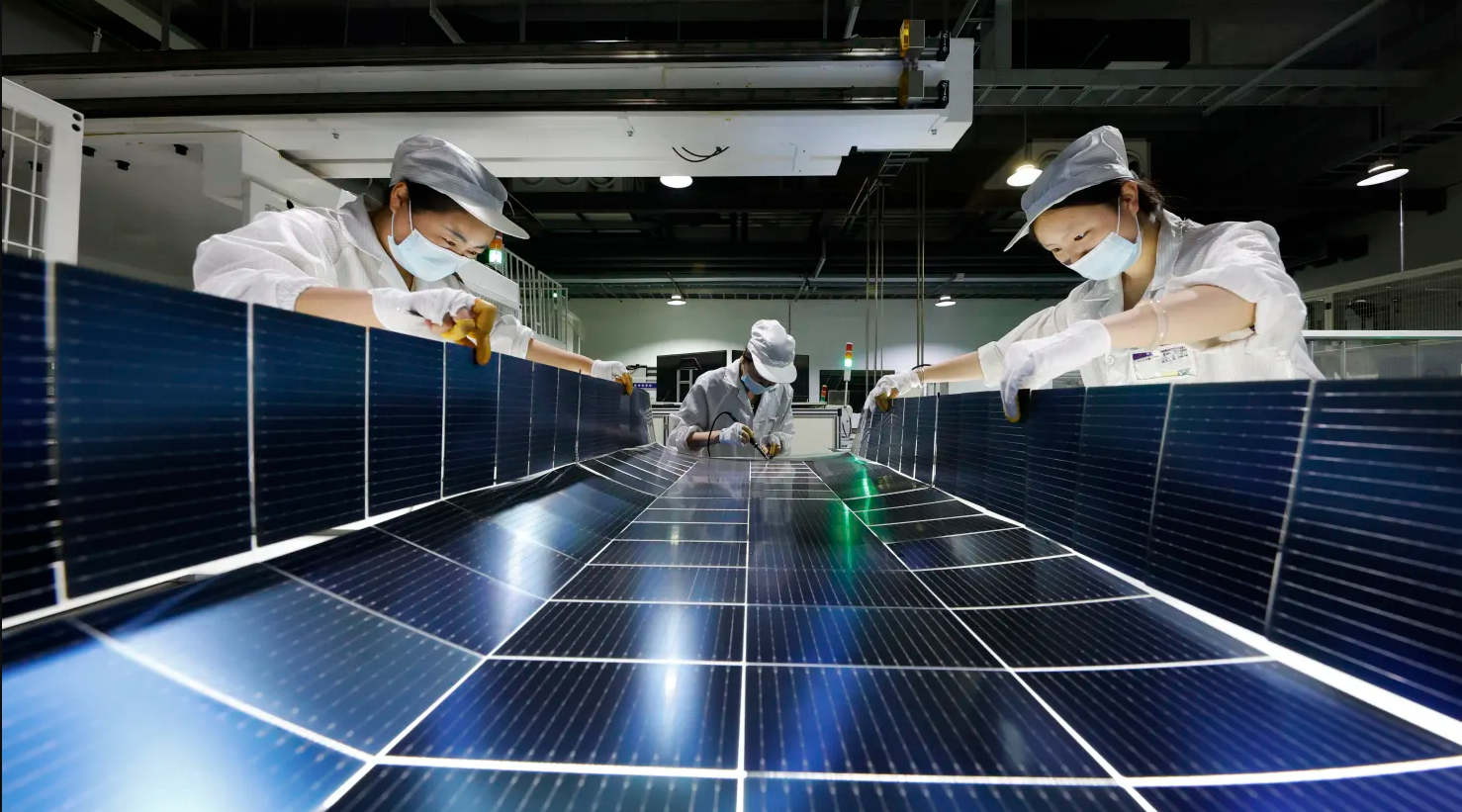

China’s industrial sector posted strong growth in March, with profits rising sharply despite global economic uncertainty and rising energy costs linked to geopolitical tensions.
According to data from the National Bureau of Statistics, industrial profits increased 15.8% year-on-year in March, marking the fastest growth in six months. This follows a 15.2% rise in the first two months of the year, bringing total first-quarter profit growth to 15.5% — the strongest start since 2017, excluding the pandemic period.
The growth was largely driven by strong performance in high-tech and manufacturing sectors. Equipment manufacturing profits rose by 21% in the first quarter, while high-tech manufacturing surged by 47.4%. Industries linked to artificial intelligence and semiconductors played a major role, with optical fiber manufacturers seeing profits jump over 300%.
Other emerging sectors also recorded strong gains. Drone manufacturers reported profit growth of more than 50%, while companies producing smart consumer devices and advanced electronics also posted solid increases. These gains highlight China’s ongoing shift toward technology-driven industrial growth.
Raw material producers also benefited, with profits rising nearly 78% in the first quarter as oil refineries returned to profitability. Non-ferrous metal industries saw profits more than double, supported by higher commodity prices and government efforts to control excess production.
Strong export performance further supported the rise in profits. China’s exports grew nearly 15% in the first quarter, providing a key boost to manufacturing activity. Analysts say this export strength has been a major factor in stabilizing the industrial sector after several years of weak performance.
However, challenges remain. Rising oil prices — with Brent crude increasing significantly in recent months — are pushing up costs for industries dependent on raw materials like chemicals, plastics, and fibers.
The ongoing tensions around the Strait of Hormuz, combined with global uncertainty, could impact supply chains and increase costs further. While China’s reliance on coal and renewable energy provides some protection from oil shocks, higher import costs and slowing global demand could still weigh on growth in the coming months.
Economists note that while China is relatively resilient compared to other economies, it is not fully insulated from global pressures. Weak domestic demand, a struggling property sector, and job market concerns continue to pose risks.
At the same time, recent increases in producer prices — ending a long period of deflation — suggest that rising commodity prices are beginning to feed into the broader economy. While this may support profits in some sectors, it could also create inflationary pressure.
Overall, China’s industrial sector has shown strong momentum driven by technology and exports, but its outlook remains closely tied to global economic conditions and geopolitical developments.