
Taylor Swift Moves to Protect Her Voice and Image from AI With New Trademark Filings
London: Global pop star Taylor Swift has taken new legal steps to protect her identity from artificial intelligence misuse by filing trademark applications for her voice and image in the United States.
The applications, submitted on Friday to the United States Patent and Trademark Office (USPTO), include two audio recordings and one photograph, all owned under her company TAS Rights Management.
Legal experts say the move highlights growing concerns in the entertainment industry over AI-generated content that can closely replicate celebrities’ voices, appearances, and performances without consent.
According to trademark attorney Josh Gerben, the filings include “sound marks,” a relatively uncommon category of trademark protection. He noted that attempting to register a celebrity’s spoken voice is an emerging legal strategy that has not yet been tested in court.
The audio clips feature Swift promoting her upcoming album, The Life of a Showgirl, including one message directing fans to Amazon Music and another encouraging Spotify pre-saves ahead of its October 3 release.
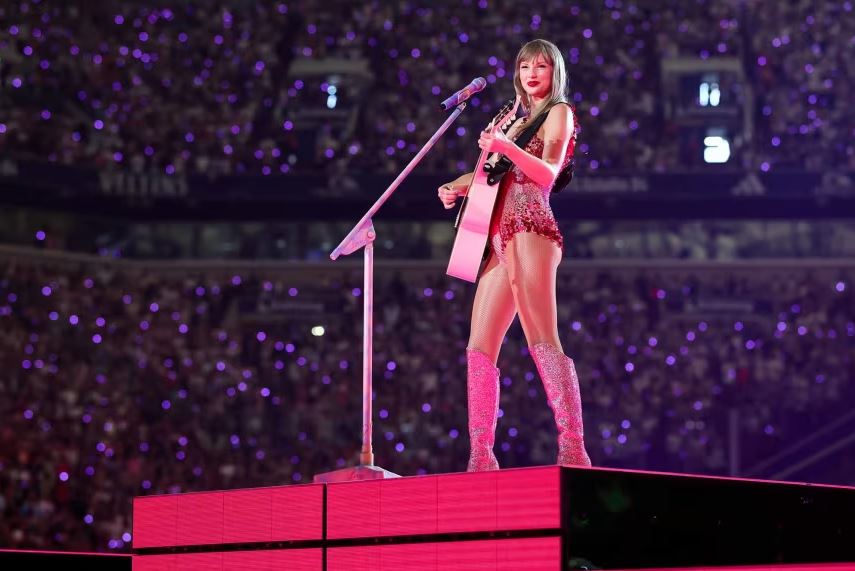
The image included in the filing shows Swift performing on stage with a pink guitar during her Eras Tour, one of her most recognizable visual moments.
Experts say the move reflects a broader shift in how artists are responding to AI technology, which can now generate highly realistic fake audio and video content. Traditional copyright laws often fall short in addressing these AI-created imitations, prompting celebrities to explore trademark protections instead.
Similar legal strategies have also been used by actor Matthew McConaughey, who has filed applications to protect his voice and likeness.
Swift has reportedly filed more than 300 trademarks in the United States, reinforcing her brand identity and tightening control over how her name, voice, and image are used commercially.
Legal observers believe these filings could shape future court decisions as the entertainment industry continues to grapple with AI-driven content creation.