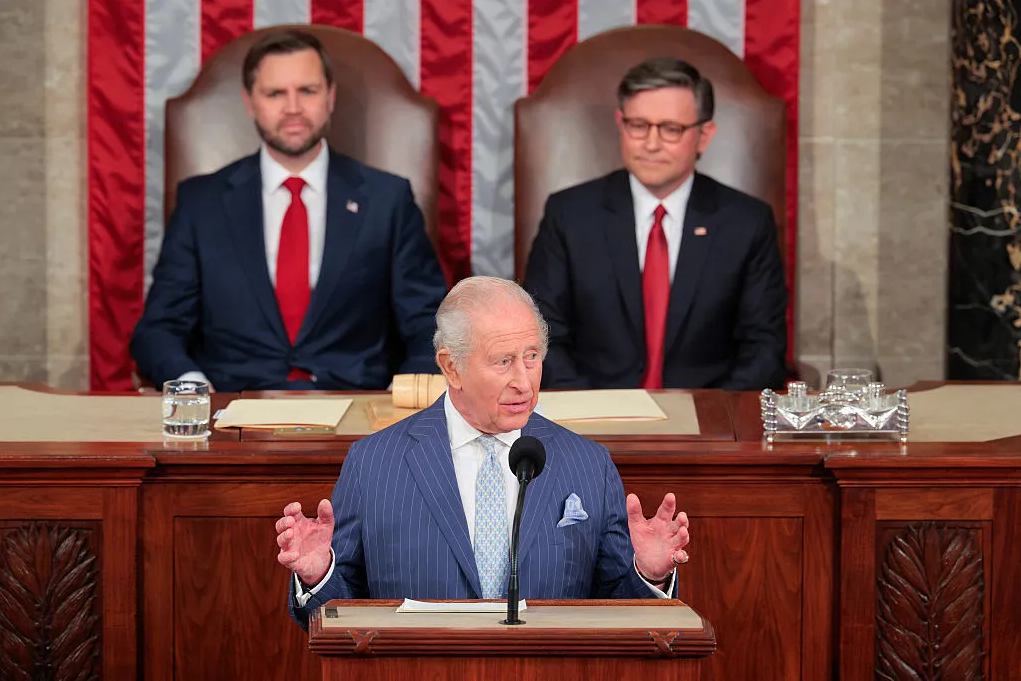

WASHINGTON: King Charles III delivered a landmark address to the US Congress, aiming to reinforce the historic alliance between the United Kingdom and the United States at a time of global uncertainty and diplomatic strain.
Speaking before lawmakers, the King acknowledged that relations between the two nations have faced challenges in recent months, particularly over differences in international policy. However, he stressed that such disagreements are not new and should not overshadow the deep-rooted partnership built over centuries.
He highlighted the importance of unity in addressing global crises, including conflicts in the Middle East and Europe, as well as the growing threat of political violence. Emphasising shared democratic values, the King said both nations must stand together to protect liberty, tolerance and equality.
During his speech, King Charles also underlined the significance of constitutional principles such as checks and balances, referencing the historic Magna Carta as a foundation of modern democratic systems. His remarks drew strong reactions from lawmakers across the political spectrum.
The monarch reaffirmed the United Kingdom’s commitment to international alliances, particularly NATO, noting the role such partnerships play in maintaining global security. Drawing on his own experience in military service, he emphasised the importance of continued cooperation between the US, the UK, and their allies.
Notably, the King did not directly address the controversy surrounding Jeffrey Epstein, despite ongoing public attention on the issue. Instead, he made a broader reference to supporting victims of societal injustices.
Balancing serious themes with lighter moments, the King also used humour to engage his audience, referencing cultural ties and historical differences between the two nations.
The address comes amid a sensitive period in US-UK relations, with Donald Trump having previously criticised British leadership over foreign policy decisions. Despite this, the King’s message focused on “reconciliation and renewal,” signalling a desire to strengthen cooperation moving forward.
The speech marks a significant moment in modern diplomacy, reflecting both the challenges and enduring strength of the transatlantic relationship.