

Myanmar’s Aung San Suu Kyi Moved to House Arrest, Military Announces
The detained former leader of Myanmar, Aung San Suu Kyi, has been transferred to house arrest, according to an announcement by the country’s military authorities.
State media reported that the 80-year-old Nobel Peace Prize laureate, who has been in custody since the 2021 military coup, will now serve the remainder of her sentence at a designated residence. The decision was confirmed in a statement by junta leader Min Aung Hlaing, who said her sentence had been “commuted.”
Suu Kyi, once a global symbol of peaceful resistance, rose to power in 2015 following democratic reforms in Myanmar. Prior to that, she had spent more than 15 years under house arrest during decades of military rule.
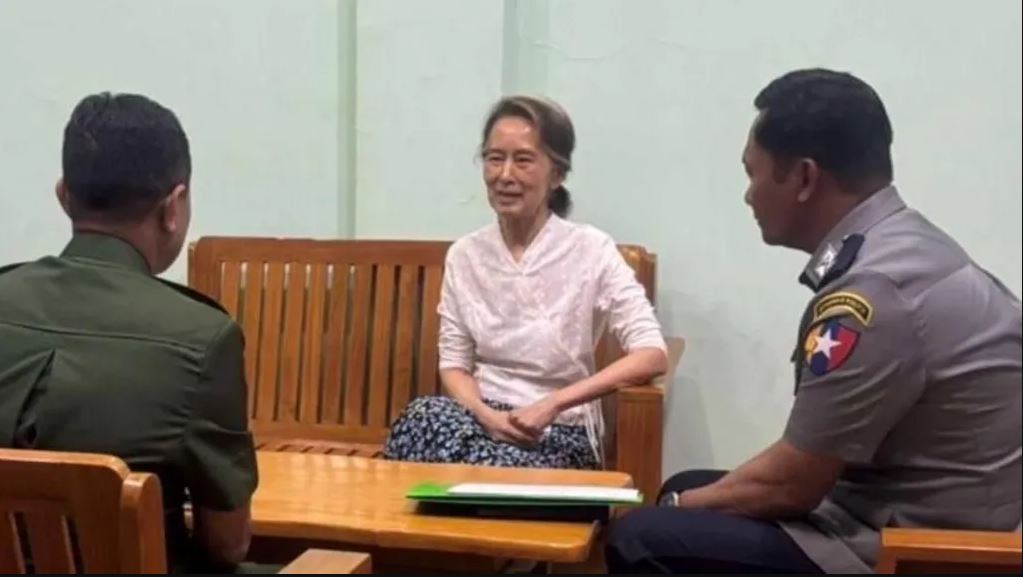
A photograph broadcast by state media showed her seated alongside two uniformed personnel, though the image has raised doubts among her family. Her son, Kim Aris, expressed skepticism, stating that the image appeared outdated and did not confirm her current condition.
“I hope this is true, but I haven’t seen any real evidence,” he said, adding that he has had no communication with his mother for years and remains uncertain about her wellbeing or location.
Suu Kyi’s legal team has also reported that they have not received official confirmation of the move.
Since her arrest during the military takeover in 2021, little verified information has emerged about her health or living conditions. Her lawyers have been denied access for more than three years, and her family has had no contact for over two.
Her initial 33-year prison sentence, based on charges widely criticized as politically motivated, has been reduced multiple times. Observers suggest that her reappearance in state media may signal potential changes in her status, including a possible release.
Analysts believe the move could be part of efforts by the military leadership to ease international pressure and improve diplomatic standing. In recent months, the junta has sought to consolidate control following reported battlefield gains and a controversial election that nominally restored civilian governance while maintaining military dominance.
Despite her legacy as a democracy icon and Nobel laureate, Suu Kyi’s global reputation suffered after she defended Myanmar against genocide allegations at the International Court of Justice regarding the military’s actions against Rohingya Muslims in 2017.
Her current situation remains unclear, with international observers continuing to call for transparency and access.