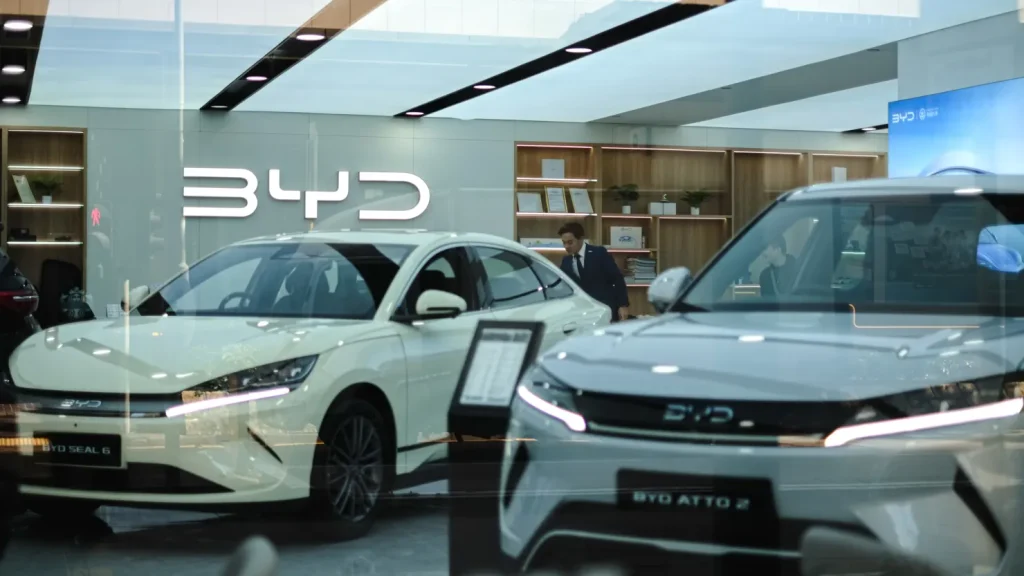

The world’s largest electric vehicle maker, BYD, says it can maintain its global leadership despite being effectively shut out of the United States, one of the world’s most lucrative car markets.
Speaking at the Beijing auto show, BYD executive vice president Stella Li said the company remains confident in its global position even without access to American consumers. She emphasized that while the US market is significant, BYD’s growth strategy is focused on expanding across other regions.
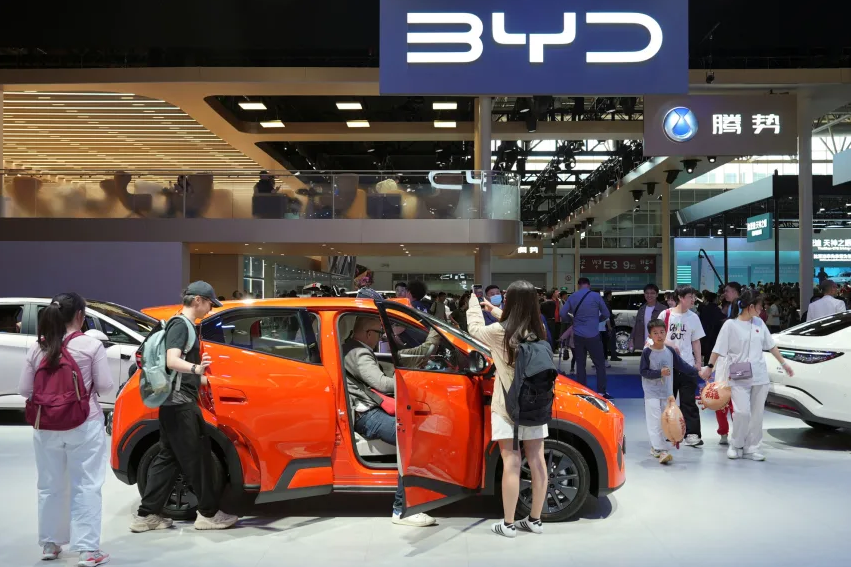
The United States has imposed strict restrictions on Chinese automakers, citing national security concerns and the need to protect domestic manufacturers. These policies have effectively blocked companies like BYD from entering the US market. The issue is expected to be a key topic in upcoming discussions between Xi Jinping and Donald Trump.
Despite this barrier, BYD has no immediate plans to enter the US and is instead accelerating its global expansion. The company aims to sell at least 1.5 million vehicles overseas this year, significantly increasing its international footprint.

BYD’s rise has been driven by its strong control over production and supply chains, as well as its ability to produce affordable electric vehicle batteries. Originally a battery manufacturer, the company transitioned into carmaking and quickly gained a competitive edge through cost efficiency and technological innovation.
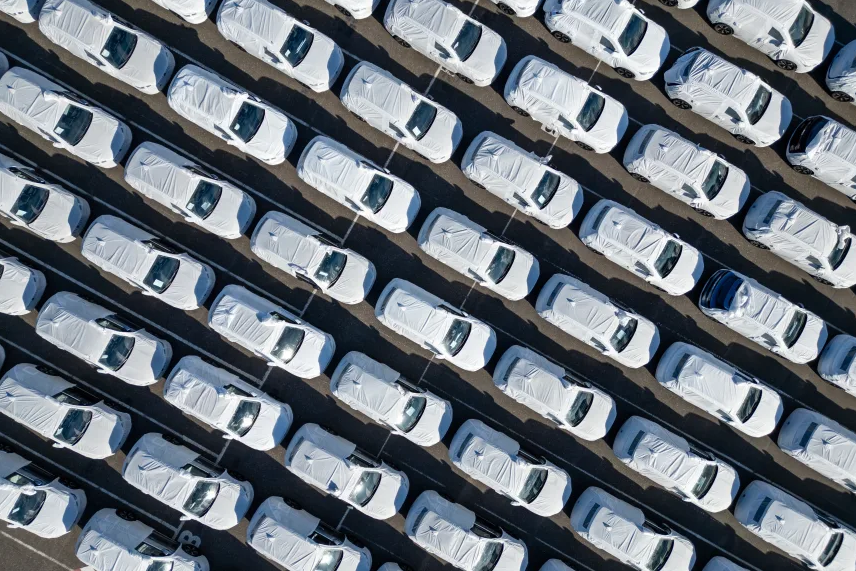
Tomas Cuesta/AFP/Getty Images
However, challenges are emerging in its home market. Slowing demand, reduced government subsidies, and intense competition from other Chinese automakers have put pressure on profits. The company reported a decline in earnings in 2025, with further drops continuing into early 2026.
Rivals such as Geely have also begun to gain ground, reflecting the increasingly crowded and competitive EV landscape in China. Industry analysts say the race for market share has turned into a fierce price war, forcing companies to constantly innovate and cut costs.

Tobias Schwarz/AFP/Getty Images
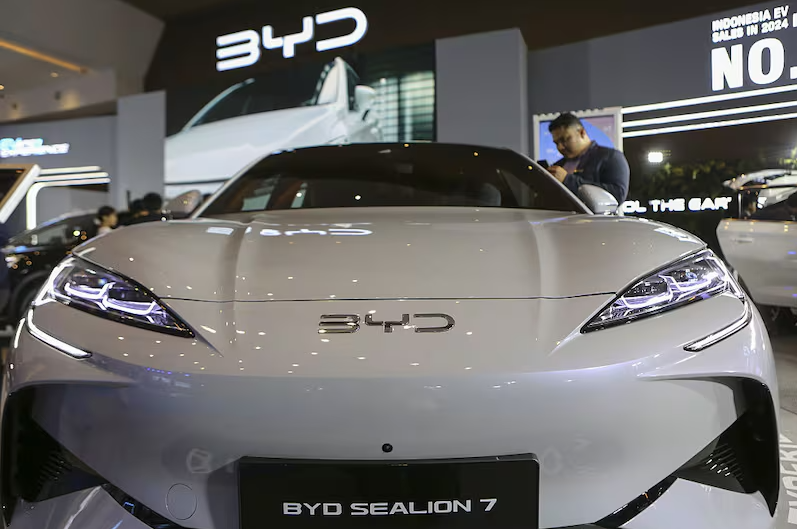
To offset domestic challenges, BYD is focusing heavily on international markets. The company has already expanded into Europe, Southeast Asia, and Latin America. New manufacturing facilities in countries like Hungary, Thailand, and Brazil are part of its strategy to localize production and avoid trade barriers.
In Europe, BYD has seen strong growth, with vehicle registrations rising sharply. The company is also investing in advanced technologies, including fast-charging systems capable of significantly reducing charging times, as well as developments in self-driving software.
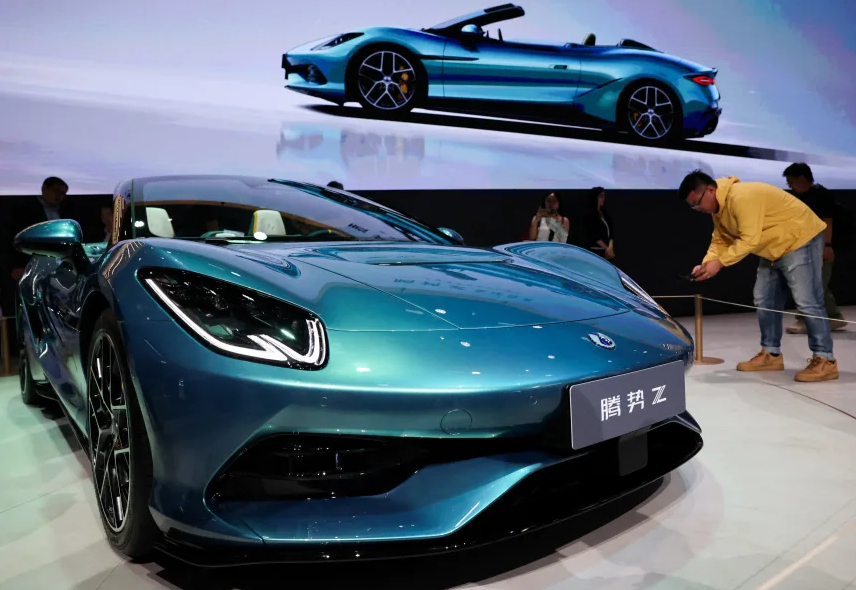
Maxim Shemetov/Reuters
The global energy situation may also work in BYD’s favor. Rising oil prices linked to geopolitical tensions are pushing more consumers to consider electric vehicles as an alternative to traditional fuel-powered cars.
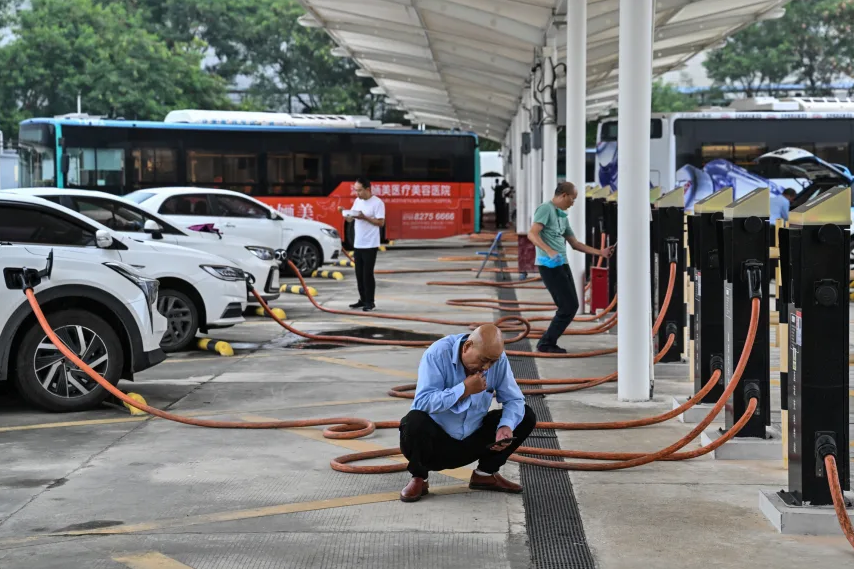
Hector Retamal/AFP/Getty Images
BYD’s leadership believes that continued investment in innovation, infrastructure, and global expansion will help the company stay ahead in the rapidly evolving EV market. While the US remains out of reach for now, the company is betting that demand from the rest of the world will be enough to sustain its top position.