
The United Arab Emirates has defended its recent decision to exit OPEC, stating that the move was not aimed at any specific country but driven by its own national priorities.
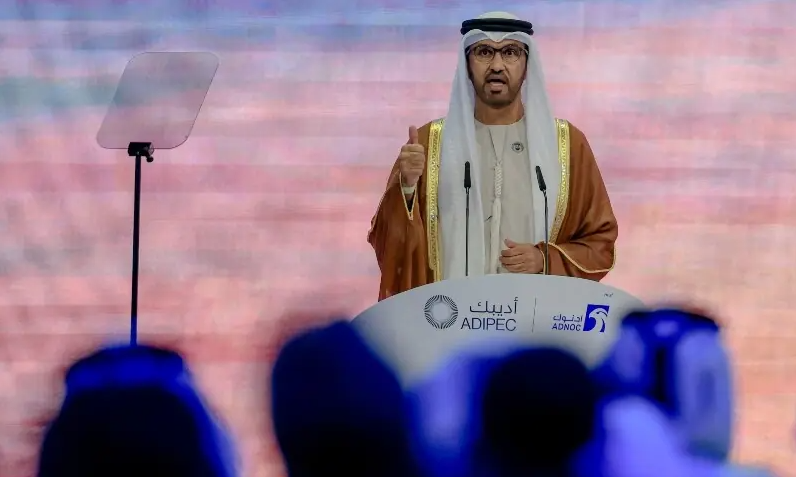
Speaking at a conference in Abu Dhabi, Energy Minister and CEO of Abu Dhabi National Oil Company, Sultan Al Jaber, said the decision reflects a broader strategy to reshape the country’s economy and strengthen its position in the global energy market.
“The UAE’s sovereign decision to reposition itself within the global energy landscape… is not directed against anyone,” he said, emphasizing that the move aligns with long-term economic and industrial goals.
The UAE officially left OPEC on Friday, becoming one of the most significant producers ever to exit the oil cartel. The departure comes after months of tensions with Saudi Arabia, which has long been the dominant force within OPEC. Disagreements over oil production quotas, foreign policy differences, and regional conflicts had strained relations between the two Gulf nations.
Despite these tensions, Emirati officials insist the decision is purely strategic. The UAE has expressed frustration with OPEC’s production limits, which capped its output at around 3.4 million barrels per day. The country now aims to increase its production capacity to five million barrels per day by 2027.
Officials say leaving the cartel will allow greater flexibility in expanding oil output, attracting investment, and supporting economic diversification. The UAE has already announced major spending plans, with ADNOC pledging $55 billion for new energy projects over the next two years.
Analysts believe the move could have significant implications for global oil markets. As OPEC’s fourth-largest producer, the UAE’s exit may weaken the group’s ability to influence oil prices and maintain supply discipline.
At the same time, the UAE is looking beyond oil. Increased revenues are expected to support investments in emerging sectors such as artificial intelligence, technology, and advanced manufacturing, as part of a broader push to build a more resilient and diversified economy.
While the decision has added strain to UAE-Saudi relations, officials in Abu Dhabi maintain that it represents an opportunity rather than a conflict. They argue that adapting to global changes and focusing on national development is essential in an evolving energy landscape.
The UAE’s move signals a shift in how major oil producers are positioning themselves for the future, balancing traditional energy interests with new economic ambitions.