
Quantum Firms Race to Market as Breakthroughs Push Industry Toward Commercialization
Quantum computing companies are accelerating their push into public markets, signaling growing confidence that the once-experimental technology is nearing a commercial turning point.
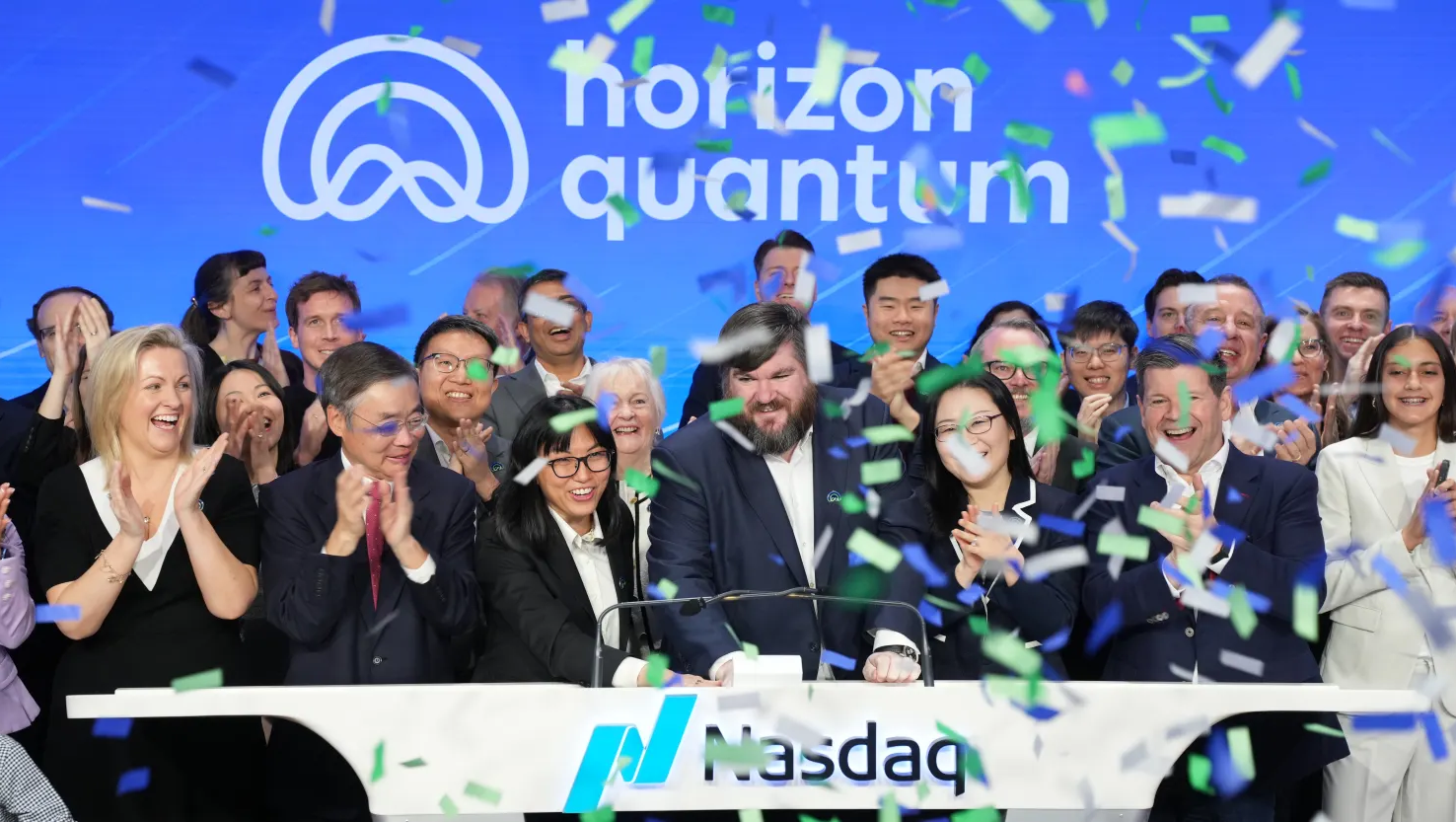
Firms such as Xanadu Quantum and Horizon Quantum Computing have recently gone public through mergers with Special Purpose Acquisition Companies (SPACs), highlighting a trend among startups seeking faster access to capital.
Xanadu, which develops both quantum hardware and software, debuted on major exchanges including Nasdaq, while Horizon Quantum began trading following its merger with a blank-check firm. Earlier, IonQ became the first publicly traded pure-play quantum computing company through a similar route.
Quantum computing leverages the principles of quantum mechanics to process information in ways traditional computers cannot, offering transformative potential across industries such as drug discovery, logistics, cryptography, and materials science.
Despite volatile global markets and investor caution toward high-risk technologies, companies are moving ahead with listings to capitalize on recent scientific advancements.
Experts say the industry is reaching a crucial “inflection point,” driven by breakthroughs in quantum error correction, increased qubit counts, and improved system reliability. These developments are bringing the concept of “quantum advantage” — where quantum machines outperform classical supercomputers — closer to reality.
According to analysts, initial demonstrations of practical quantum advantage could emerge by the late 2020s, though large-scale commercial applications may take until the mid-2030s.
Investment in the sector continues to grow, with major technology companies such as Alphabet, Microsoft, Amazon, and IBM pouring billions into research and development.
Industry analysts note a shift in perception — from quantum computing being viewed as a scientific experiment to a viable commercial opportunity. Estimates suggest the market could eventually be worth between $100 billion and $250 billion.
Early use cases are already emerging in optimization, financial modeling, and chemical simulations, while companies are also exploring revenue opportunities through hybrid software solutions and cloud-based quantum services.
Governments have historically driven quantum research through heavy investment, with the United States, China, and the European Union committing substantial funding to secure strategic advantages in computing and cybersecurity.
However, the latest wave of public listings indicates a broader transition toward commercialization, even as challenges remain and widespread adoption is still years away.
Experts say that while personal quantum computers may be decades from reality, enterprise-level applications could arrive much sooner — potentially reshaping industries and redefining the future of computing.