
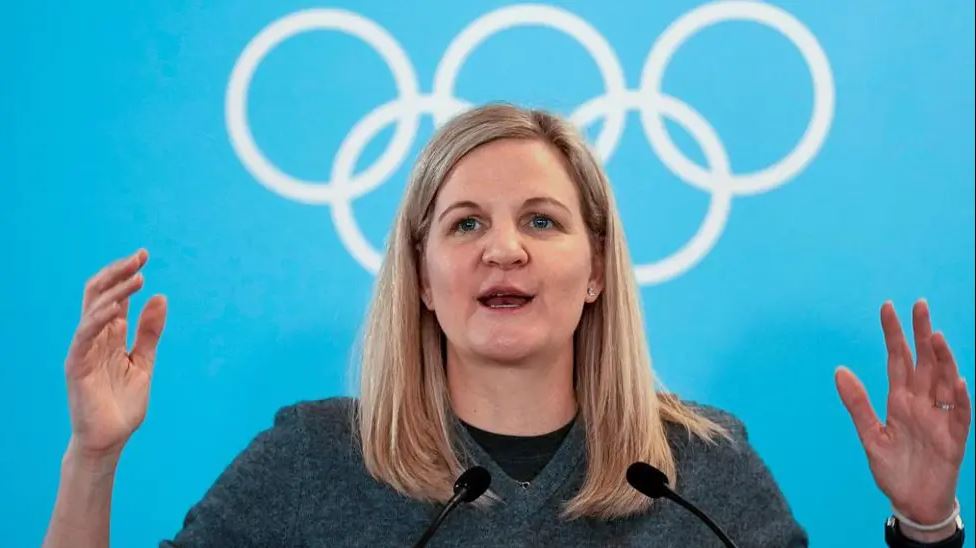

The International Olympic Committee (IOC) has announced a major change in its policy, deciding that only biological females will be allowed to compete in women’s events at future Olympic Games.
The new rule, which will take effect from the 2028 Los Angeles Olympics, will also apply to transgender women and athletes with differences in sex development (DSD) who have gone through male puberty. The decision marks a significant shift from the IOC’s earlier stance, where individual sports were allowed to decide their own eligibility rules.
Previously, the IOC had avoided making universal rules. In 2021, then-president Thomas Bach said that there was no “one-size-fits-all” solution and that each sport should set its own guidelines. However, under new president Kirsty Coventry, the organization has now introduced a blanket policy to create a uniform standard.
🔍 Why the Change?
The IOC says the decision is based on scientific, medical, and ethical developments. According to the organization, research shows that male biological characteristics can provide performance advantages in sports involving strength, speed, and endurance.
Officials stated that these advantages remain even if testosterone levels are reduced. They estimate that male athletes may have a 10–12% advantage in activities like running and swimming, and even higher advantages in power-based sports such as boxing or throwing events.
Many sports bodies had already started tightening rules. Organizations like World Athletics and World Boxing introduced stricter eligibility criteria after controversies involving gender eligibility in recent competitions.
⚖️ How the New Rule Will Work
The IOC plans to use a one-time genetic test known as the SRY gene screening. This test detects the presence of a Y chromosome, which is linked to male biological development.
The test can be done through saliva, blood, or cheek swabs. The IOC says this method is simple and less intrusive compared to earlier testing methods. However, exceptions may apply in certain medical conditions, such as complete androgen insensitivity syndrome (CAIS).
🌍 Global Reactions
The decision has received mixed reactions worldwide.
Many women’s rights groups and sports organizations have welcomed the move, saying it protects fairness and ensures equal competition in women’s sports. Some believe female athletes were previously at a disadvantage competing against those with male biological traits.
However, critics argue that the policy raises serious ethical and human rights concerns. Some experts say genetic testing can be invasive and may reveal sensitive personal information, especially for younger athletes.
Athletes have also spoken out. American runner Nikki Hiltz criticized the decision, saying it targets a very small group and is unnecessary.
Meanwhile, Olympic champion Caster Semenya, who has a DSD condition, strongly opposed the rule, stating that female biology is diverse and should not be narrowly defined.
⚠️ Legal and Ethical Concerns
Legal experts have warned that the policy could face challenges in courts. Some argue that mandatory genetic testing may violate privacy laws and anti-discrimination rules in certain countries.
For example, in places like France, genetic testing is strictly regulated, which could create complications in implementing the rule globally.
There are also concerns about fairness in testing procedures, potential errors, and the psychological impact on athletes who may be affected by the results.
❓ What Questions Remain?
Several key questions are still unanswered:
- How will the IOC handle legal challenges from athletes or countries?
- Will all countries accept and implement genetic testing rules?
- Could similar policies be introduced in the Paralympics or lower-level sports?
- How will athlete privacy and mental well-being be protected?
The Olympic Games has long been seen as a symbol of fairness and unity, but this new decision highlights the ongoing challenge of balancing inclusion with competitive equality.
As the 2028 Olympics approach, the debate is expected to continue, with strong opinions on both sides and possible legal battles ahead.