
BRISBANE: A famous and widely shared video clip known for the line “a succulent Chinese meal” has now been officially preserved as part of Australia’s cultural history.
The recording, featuring Jack Karlson, has been added to the National Film and Sound Archive of Australia (NFSA), which collects and protects important audio and video moments from the country’s past.
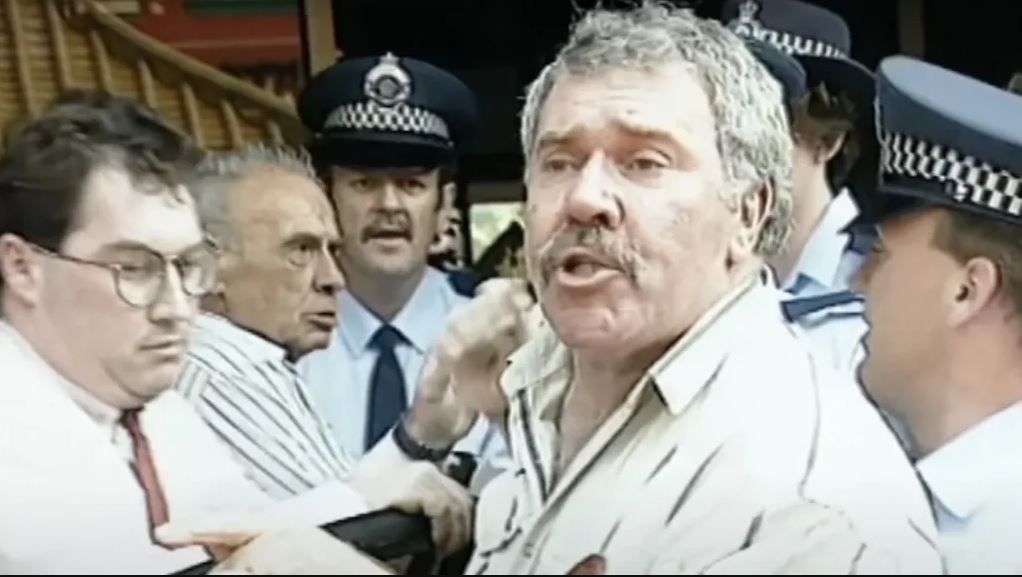
The clip shows Karlson being arrested by police at a Chinese restaurant in Brisbane in 1991. During the arrest, he delivered a dramatic and unusual speech that later became iconic. His lines, including “What is the charge? Eating a meal? A succulent Chinese meal” and “This is democracy manifest,” became widely quoted and turned into internet memes years later.
Although the incident happened in 1991, the video gained global attention after it resurfaced online in 2009. It quickly became one of Australia’s most viral clips, shared widely on social media and used in memes, music remixes, merchandise, and even artistic performances.
The NFSA described Karlson’s speech as “dramatic, indignant and unexpectedly articulate,” noting that it transformed an ordinary police arrest into a memorable cultural moment. Officials said the recording highlights how voice and personality can turn a simple event into something that lasts for generations.
Karlson, whose real name was Cecil George Edwards, lived an unusual life. He had a criminal past and was reportedly involved in several escape attempts from prison. Despite this, he always claimed that the 1991 arrest was a case of mistaken identity.
There are different theories about why he was arrested. One suggests that police confused him with a man linked to dine-and-dash incidents. Another claims he was suspected of using stolen credit cards. Karlson himself once said authorities thought he was “some international gangster.”
In 2024, Karlson passed away at the age of 82 after battling prostate cancer. Shortly before his death, he even reunited with one of the police officers from the original video to promote a documentary about his life.
The NFSA includes the clip in its annual “Sounds of Australia” collection, which recognises recordings that have had a lasting cultural impact. Each year, the archive selects important audio and visual pieces that reflect Australia’s identity and history.
Alongside Karlson’s clip, the 2026 collection also includes other culturally significant recordings, such as the song Scar by Missy Higgins and the familiar beeping sound used at pedestrian crossings across the country.
Experts say preserving such moments helps document not just major historical events, but also everyday cultural expressions that resonate with people over time.
The inclusion of the “succulent Chinese meal” clip shows how even a brief, unexpected moment can become a lasting symbol of humor, identity, and internet culture in modern history.