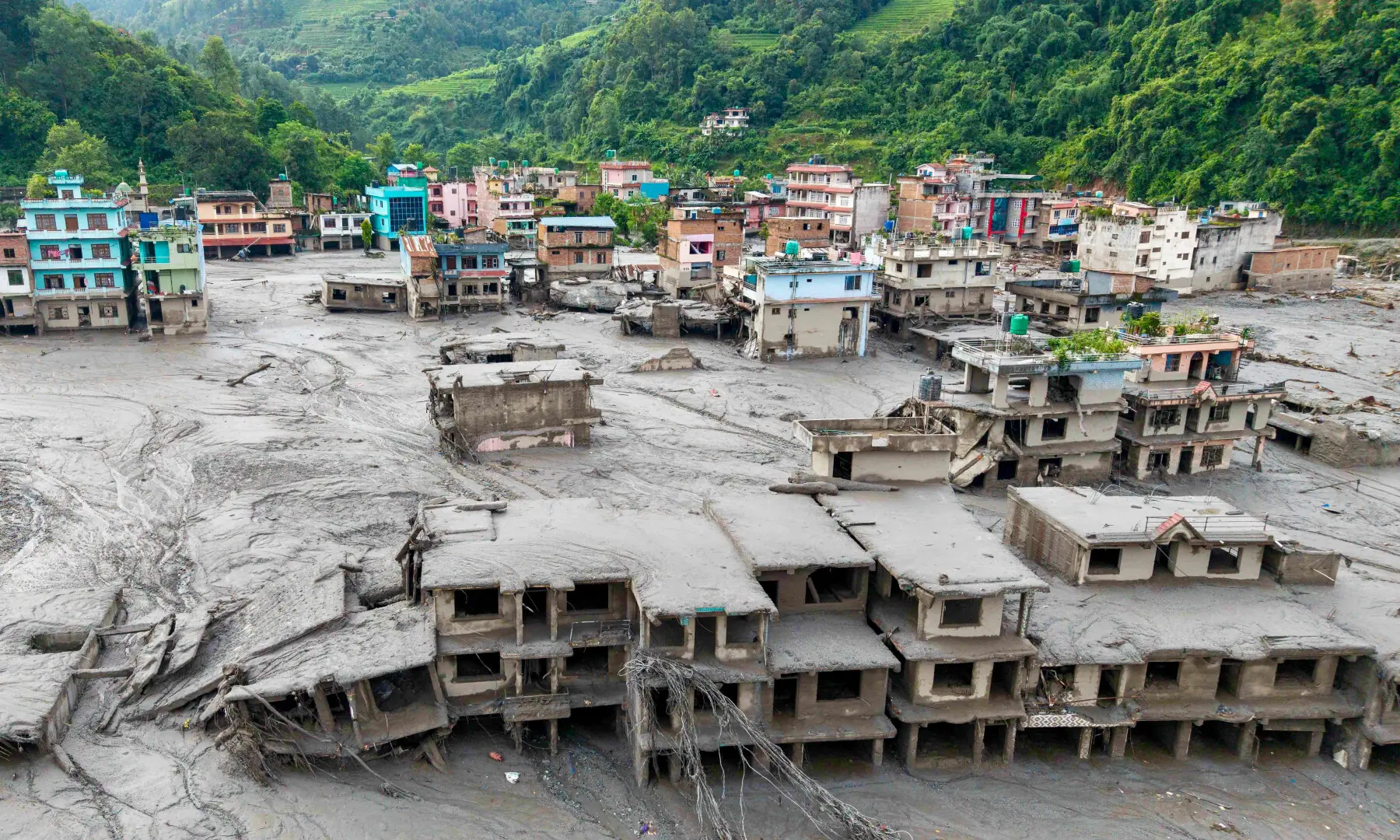

Rescue teams are searching for more than 1,300 people reported missing after catastrophic flash floods and landslides struck areas along the Nepal-Tibet border, killing at least 165 people and sweeping away villages, vehicles and buildings.
The disaster struck on Wednesday along the Bhote Koshi and Trishuli river systems, sending enormous volumes of water, mud and debris through communities in Nepal and Tibet. Nepali authorities said 162 bodies had been recovered, while Chinese state media reported three deaths on the Tibetan side.
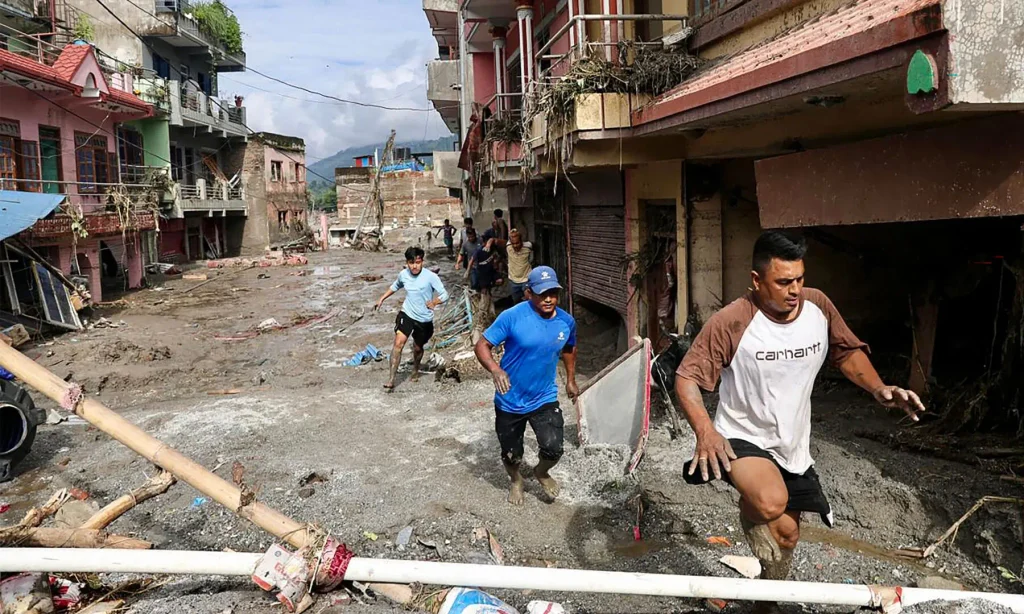
Nepal’s disaster management authorities said 823 people remained out of contact, including hundreds of Nepali and foreign tourists. In Tibet, 558 people were reported missing, including 260 foreigners.
Officials warned that the death toll could rise as rescue teams reach areas previously cut off by floodwaters and landslides.
Tourists Among the Missing
The disaster has raised particular concern over foreign tourists travelling along the popular route between Kathmandu and Lhasa.
Nepal’s tourism authorities said those reported missing included 177 Indian nationals, 63 Americans, 34 Australians, 33 Britons and 25 Canadians, alongside tourists from several other countries.
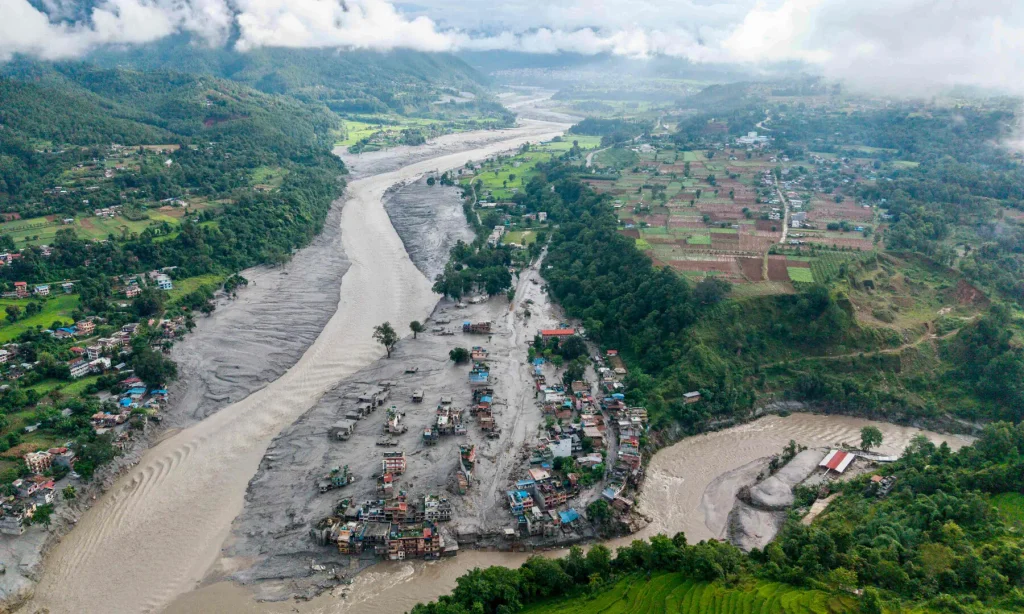
The Himalayan region remains an important destination for trekkers, pilgrims and other international visitors. Syabrubesi, a gateway to popular trekking routes and areas used by pilgrims travelling toward Mount Kailash, was among the locations affected.
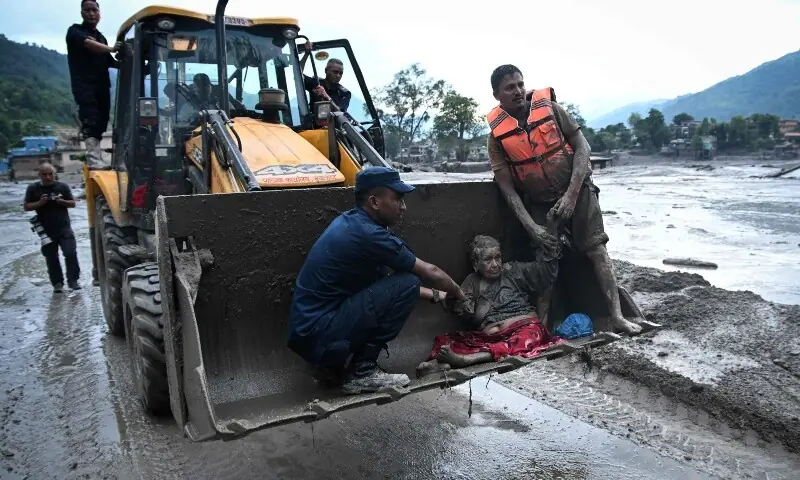
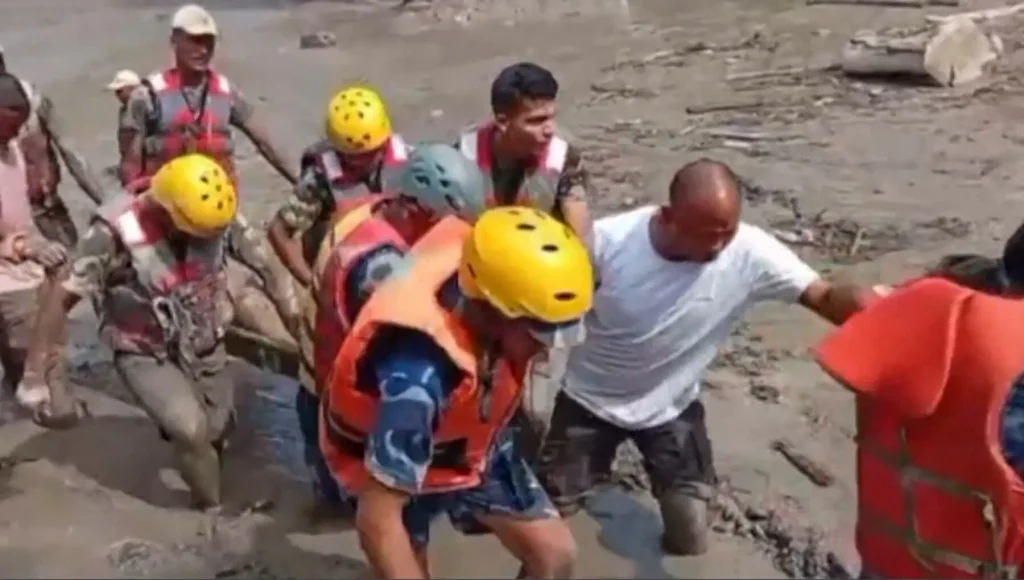
Rescuers have been searching hospitals and damaged settlements for survivors while families continue to look for missing relatives.
Survivors Describe an ‘Inland Tsunami’
Witnesses described the sudden surge of mud and debris as resembling an inland tsunami.
Entire settlements close to the rivers were inundated, while buses, trucks and cars were swept away by the force of the floodwaters. Multi-storey buildings were buried in mud and lower floors disappeared beneath debris.
Nepali Army teams have been conducting rescue flights and evacuating people from areas considered at risk. Emergency workers are also using boats, sniffer dogs and other equipment to search for survivors.
China has mobilised hundreds of emergency personnel and vehicles on the Tibetan side of the border, while international organisations are providing humanitarian assistance.
The International Federation of Red Cross and Red Crescent Societies said it was sending emergency supplies including blankets, first-aid kits and stretchers. The United States also announced disaster assistance, while UN teams have been deployed to support affected communities.
Glacial Collapse Linked to Disaster
The United States Geological Survey said its analysis indicated that the disaster was triggered by a glacial collapse and subsequent debris flow rather than an earthquake.
The event was initially reported as a magnitude 4.4 earthquake, but analysis of seismic data, long-period waves and satellite imagery led researchers to conclude that no earthquake had occurred.
Scientists have increasingly warned that rising temperatures and glacier loss can increase the risk of glacial lake outburst floods, ice collapses and destructive debris flows in the Himalayas.
Experts have also warned that the danger may not yet be over. A blockage remains upstream along the Nepal-China border river, raising concerns that another surge of water could occur if the blockage fails.
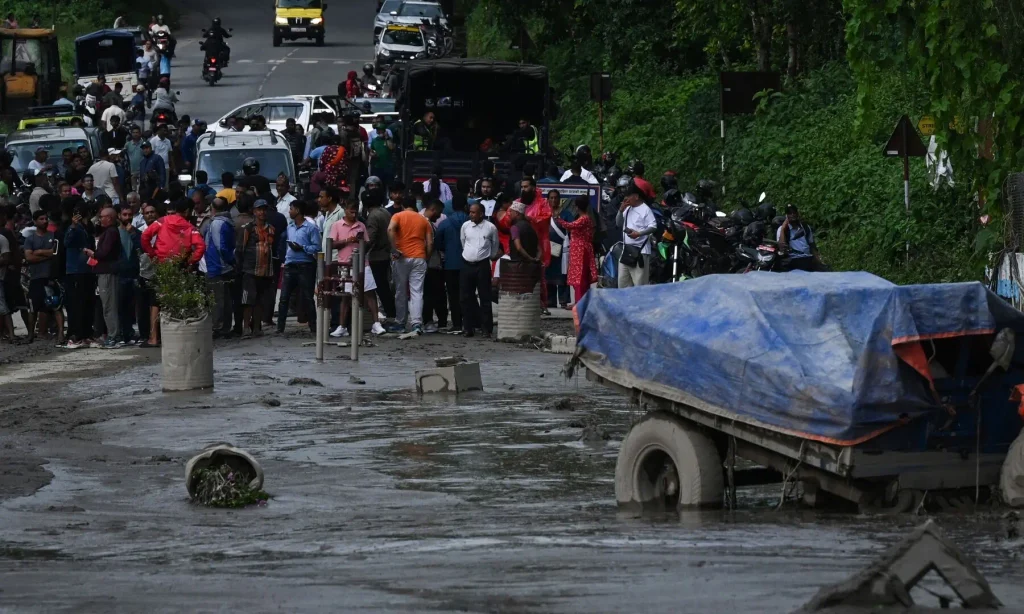
Authorities have therefore urged people in vulnerable areas to remain alert and follow evacuation instructions.
The scale of the destruction has highlighted the growing risks faced by Himalayan communities and travellers as extreme weather, unstable mountain terrain and rapid changes in glaciers combine to create increasingly dangerous conditions.