
The scene is as old as warfare itself: soldiers surrendering with their hands raised. But in Ukraine’s evolving battlefield, that image is changing dramatically. In a recent operation described by Ukrainian commanders, two Russian soldiers reportedly surrendered not to human troops, but to remotely operated ground robots and drones controlled from miles away.
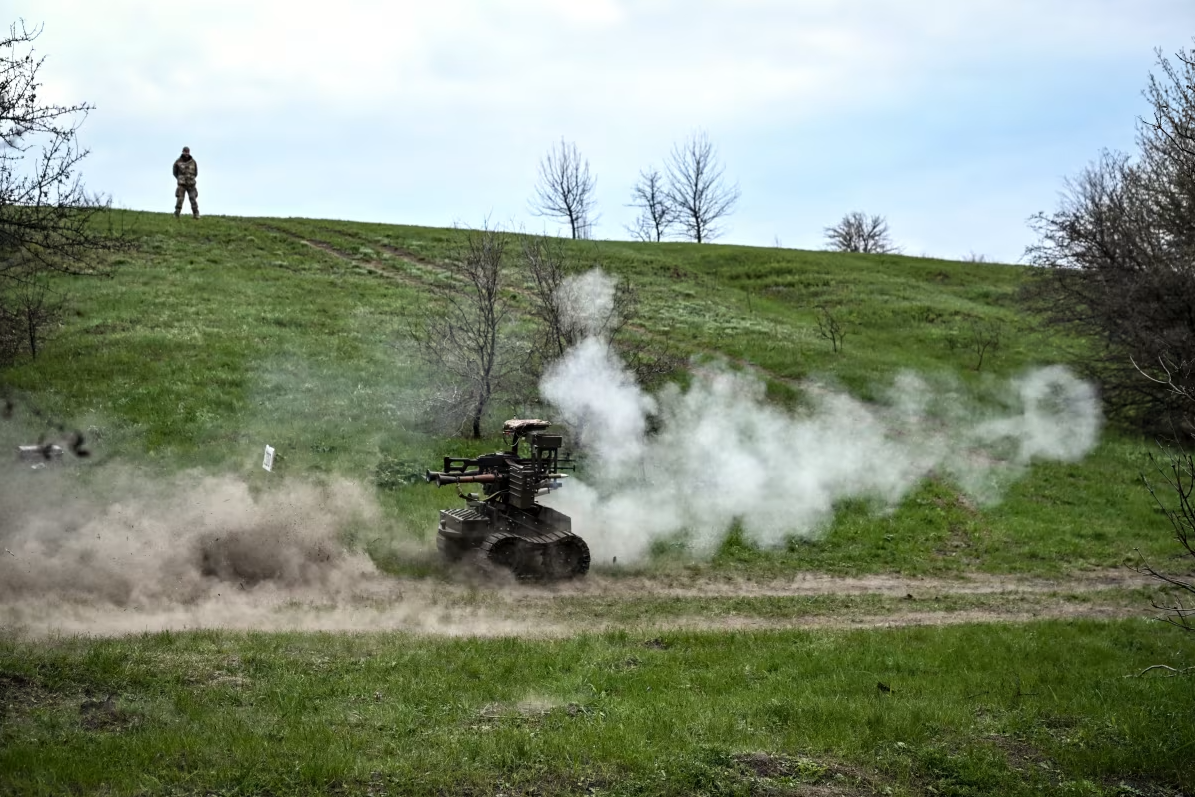
The mission, carried out by Ukraine’s Third Separate Assault Brigade, marks a shift in modern warfare where unmanned systems are increasingly replacing infantry in high-risk operations. According to unit commander Mykola “Makar” Zinkevych, the position was captured “without a single shot being fired,” highlighting the growing role of robotic systems in frontline combat.
Ukraine has significantly expanded its use of land-based drones over the course of the war. Initially deployed for logistics such as evacuating wounded soldiers and delivering supplies, these machines are now being adapted for combat roles. Unlike aerial drones, ground robots can carry heavier payloads, operate in harsh weather conditions, and remain active for extended periods with minimal maintenance.
Military officials claim these systems are already saving thousands of lives by replacing soldiers in dangerous missions. Ukrainian President Volodymyr Zelensky stated that drones and robotic systems have carried out more than 22,000 missions in recent months, emphasizing their growing importance in the country’s defense strategy.
Experts say Ukraine’s rapid technological adaptation has given it an edge in drone warfare. Analysts at the Institute for the Study of War suggest that this advantage is helping slow Russian advances and support Ukrainian counterattacks, although neither side has achieved a decisive breakthrough.
Despite the progress, questions remain about the limits of robotic warfare. Defense experts caution that while ground drones are effective for reconnaissance, supply, and targeted strikes, they are unlikely to fully replace infantry in holding territory. Concerns also persist around autonomy, with Ukrainian commanders stressing that final decisions must always remain under human control.
Ukraine’s defense leadership is now focusing on scaling these systems further, aiming to integrate robotics into frontline logistics and combat support on a much larger scale. Officials also highlight international interest in Ukraine’s battlefield innovations, as other nations study its cost-effective drone warfare model.
While artificial intelligence is being explored for future battlefield applications, commanders remain cautious about fully autonomous systems, citing risks in target identification and battlefield errors.
For now, Ukraine’s approach reflects a new era of warfare—one where machines increasingly take the front line, and human soldiers operate from safer distances, redefining the nature of modern combat.