
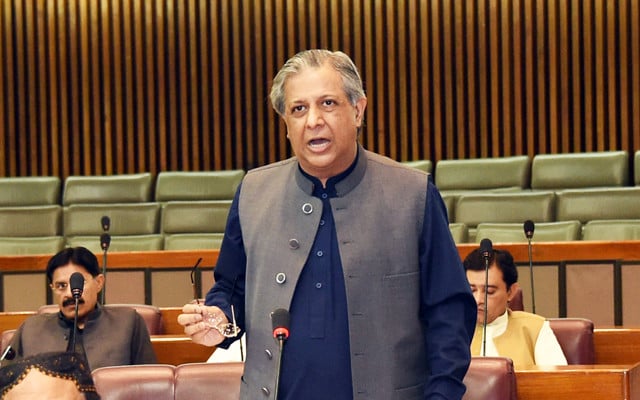

The federal government has assured the public that the proposed Pakistan Telecommunication (Reorganisation) (Amendment) Bill will not violate private property rights, amid growing concerns over its right-of-way provisions.
Speaking after an in-camera meeting of a parliamentary committee reviewing the proposed legislation, Law Minister Azam Nazeer Tarar said the government had no intention of occupying private land or installing telecom towers without the consent of property owners.
Government Rules Out Forced Installation
Tarar clarified that no telecom-related activity would be carried out on private property without permission.
He also announced that a sub-committee had been formed to examine objections raised by lawmakers and other stakeholders regarding the bill.
“The legislation is under review, and further clarifications will be incorporated to ensure that property rights remain fully protected while supporting the country’s digital development,” the minister said.
He also argued that the bill itself was not controversial and suggested that some concerns had been amplified through media coverage.
Senate Raises Objections
The National Assembly approved the bill on June 11, but it has yet to receive Senate approval.
The Senate Standing Committee on IT and Telecom objected to provisions allowing the installation of telecom towers and equipment in public spaces such as:
- Parks
- Green belts
- Government buildings
Committee members questioned why telecom towers had been included in legislation primarily intended to facilitate the expansion of optical fibre infrastructure.
Focus on Right-of-Way Reforms
The proposed legislation aims to simplify the process of granting right-of-way for telecom infrastructure, particularly fibre-optic networks.
One of the most debated provisions, Section 27B, proposes penalties of up to Rs50 million for individuals or organisations that unlawfully obstruct or delay approved telecom infrastructure projects.
Telecom Industry Supports Reforms
Telecom operators have urged Parliament to continue refining the bill while preserving its core objective of improving Pakistan’s digital infrastructure.
Telecom Operators Association Chairman Aamir Ibrahim, who also serves as CEO of Jazz, said operators generally do not face difficulties obtaining private land through commercial agreements.
Instead, he noted that the biggest challenges arise from lengthy approval procedures in:
- Housing societies
- Gated communities
- Local administrative authorities
He said the reforms are intended to establish a clearer and more predictable framework for expanding fibre-optic networks essential for Pakistan’s digital future.
Call for Balanced Legislation
PTCL/Ufone President and CEO Hatem Bamatraf also supported the proposed reforms, saying they are designed to reduce administrative delays, improve coordination among stakeholders and accelerate broadband expansion.
He stressed that Pakistan’s digital economy requires continued investment in fibre infrastructure while ensuring transparency, accountability and respect for the rights of property owners.
IT Ministry Clarifies Position
Facing criticism over the proposed amendments, the Ministry of Information Technology reiterated that private property owners would continue to have the right to:
- Raise objections
- Negotiate terms
- Seek appropriate compensation
before any telecom-related work is undertaken on their land.
The government says consultations with lawmakers, industry representatives and legal experts will continue before the legislation is finalised.