
Fresh scrutiny is mounting over potential insider trading linked to the presidency of Donald Trump, as new analysis reveals a pattern of suspicious trading activity occurring shortly before major policy announcements and public statements.
An examination of financial market data shows repeated spikes in trading volumes—particularly in oil and equities—minutes or even hours before key remarks by the U.S. president became public. The findings have raised concerns among analysts and policymakers that some market participants may have had access to non-public information, a hallmark of illegal insider trading.
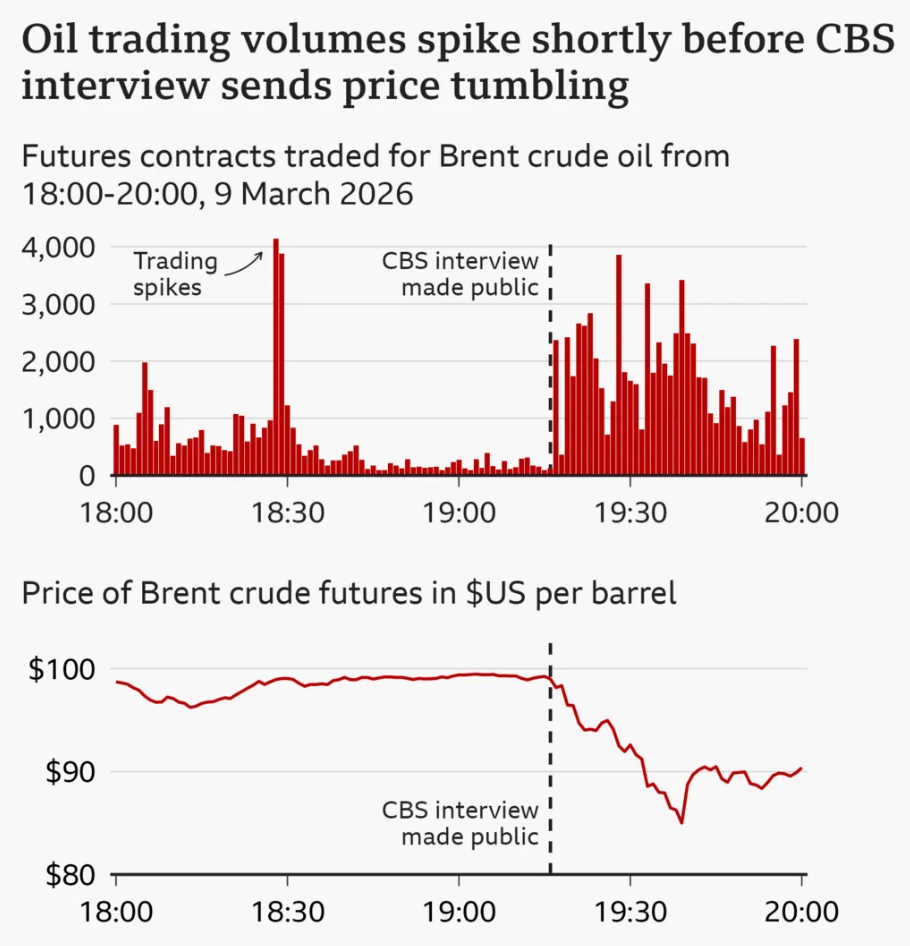
One of the most striking cases occurred on March 9, 2026, during the ongoing conflict involving United States, Israel and Iran. Shortly before Trump publicly suggested the war was “very complete,” traders placed significant bets anticipating a sharp drop in oil prices. Within minutes of the statement becoming public, oil prices plunged by approximately 25%, generating substantial profits for those who had taken early positions.
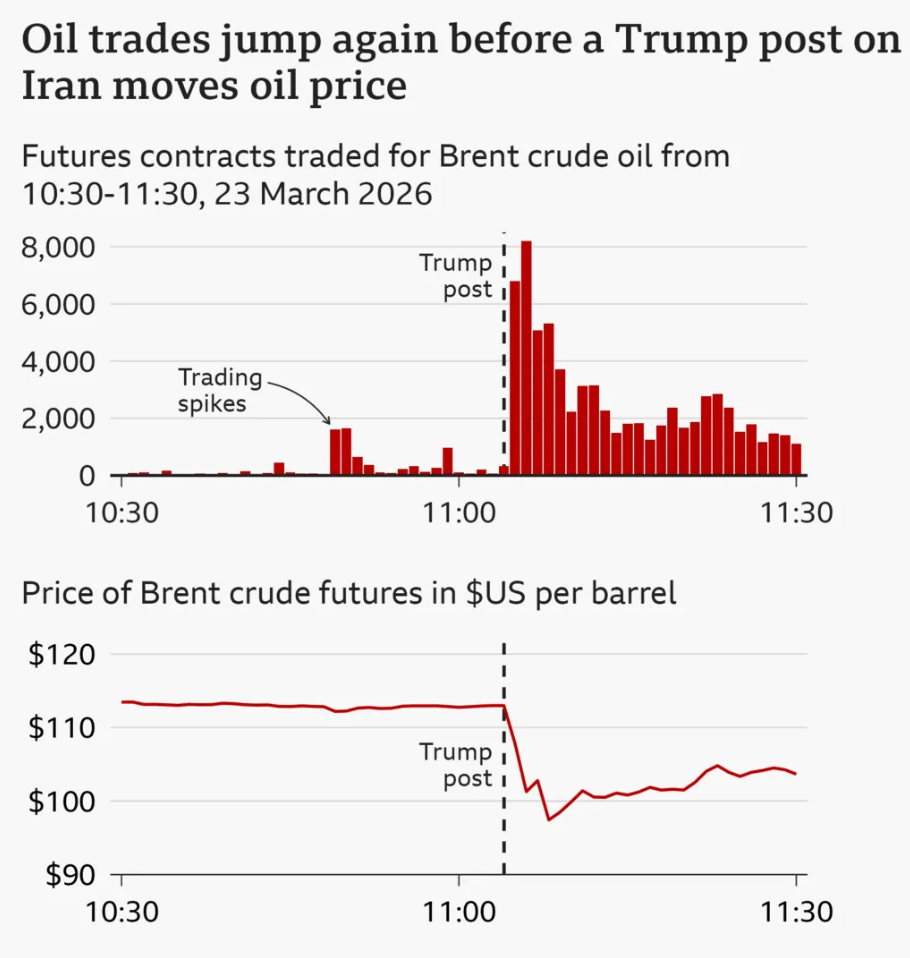
A similar pattern emerged on March 23, when Trump unexpectedly announced “very good and productive conversations” with Tehran, hinting at a resolution to hostilities. Market data shows a surge in trading activity roughly 14 minutes before the announcement, followed by a sharp decline in oil prices and a rally in stock markets once the news broke.
Earlier precedents have also drawn attention. In April 2025, Trump’s announcement of a 90-day pause on sweeping tariffs—after days of market losses—triggered a historic surge in the S&P 500 index. Yet, unusually large bets on the market rising were placed shortly before the policy reversal was made public, with some traders reportedly earning millions in profits within hours.
These repeated patterns have fueled calls for regulatory scrutiny. Lawmakers in Washington have previously urged the Securities and Exchange Commission (SEC) to investigate whether individuals with close access to decision-making circles may have benefited unfairly from advance knowledge of policy shifts. So far, the regulator has not publicly confirmed any formal probe.
Experts remain divided on the implications. Some argue the timing and scale of the trades strongly suggest the possibility of insider activity, particularly given the consistency of the pattern across multiple events. Others caution that financial markets are increasingly driven by algorithmic trading and sophisticated speculation, with traders attempting to anticipate political signals and policy directions based on emerging trends.
The White House has not responded to questions regarding the unusual trading activity, leaving key issues unresolved. Meanwhile, the broader debate touches on the integrity of financial markets and the challenges regulators face in monitoring potential abuses in an era of rapid information flow and high-frequency trading.
As geopolitical tensions and economic volatility continue to influence global markets, the stakes surrounding such allegations remain high. Whether the observed trading patterns reflect illicit activity or advanced market anticipation, the controversy underscores growing concerns about transparency, fairness, and accountability at the highest levels of power.