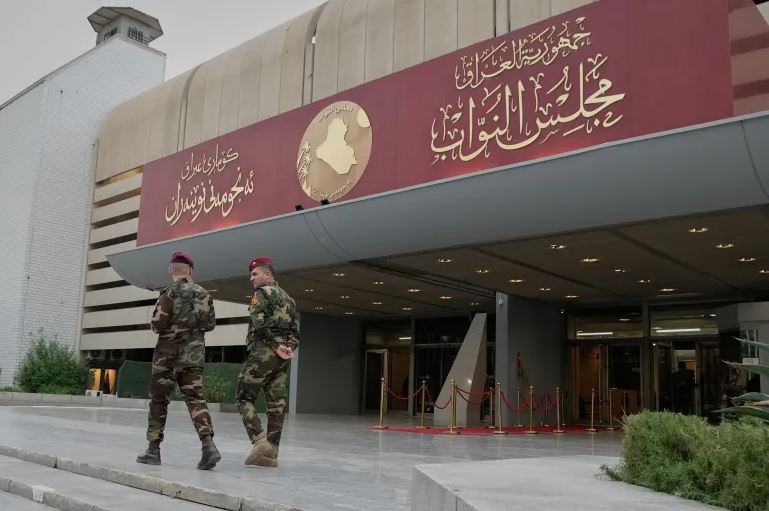

Iraq’s parliament has elected Kurdish politician Nizar Amedi as the country’s new president, bringing an end to a prolonged political deadlock that had stalled government formation for months.
Amedi, who was nominated by the Patriotic Union of Kurdistan (PUK), secured 227 votes in a second round of voting on Saturday, comfortably defeating independent candidate Muthanna Amin Nader, who received 15 votes.
With this victory, he becomes the sixth president of Iraq since the 2003 US-led invasion that led to the removal of Saddam Hussein.
Speaking after the vote in parliament, Amedi said he was fully aware of the challenges facing the country and pledged to work closely with all branches of government. He also emphasized a commitment to the principle of “Iraq First” and unity across political divisions.
Amedi also condemned recent attacks on Iraq that occurred during the US-Israel war on Iran, highlighting ongoing regional tensions affecting Iraqi stability.
The election comes at a sensitive time, as Iraq continues to deal with the political and security fallout from the recent regional conflict, which has involved Iran-backed armed groups, US forces, and Israeli strikes across multiple theatres.
Attention now turns to the more critical task of selecting a prime minister, a process widely seen as more politically contentious. Under Iraq’s power-sharing system, the prime minister must be a Shia Muslim, the parliamentary speaker a Sunni, and the president a Kurd.
The Coordination Framework, a coalition of Iran-aligned Shia parties holding a parliamentary majority, had earlier nominated former Prime Minister Nouri al-Maliki for the premiership. However, the nomination has drawn international concern, with US President Donald Trump warning of potential consequences if al-Maliki is selected to form the next government.
Under Iraq’s constitution, President Amedi now has 15 days to appoint the nominee of the largest parliamentary bloc to form a cabinet, which must be completed within 30 days.
Amedi, 58, is a veteran public servant who has held several senior roles in Iraqi politics, including serving as a presidential aide and as environment minister from 2022 to 2024.
Iraq has been without a fully formed government for nearly 150 days following elections held in November, underscoring the ongoing instability in the country’s political landscape.