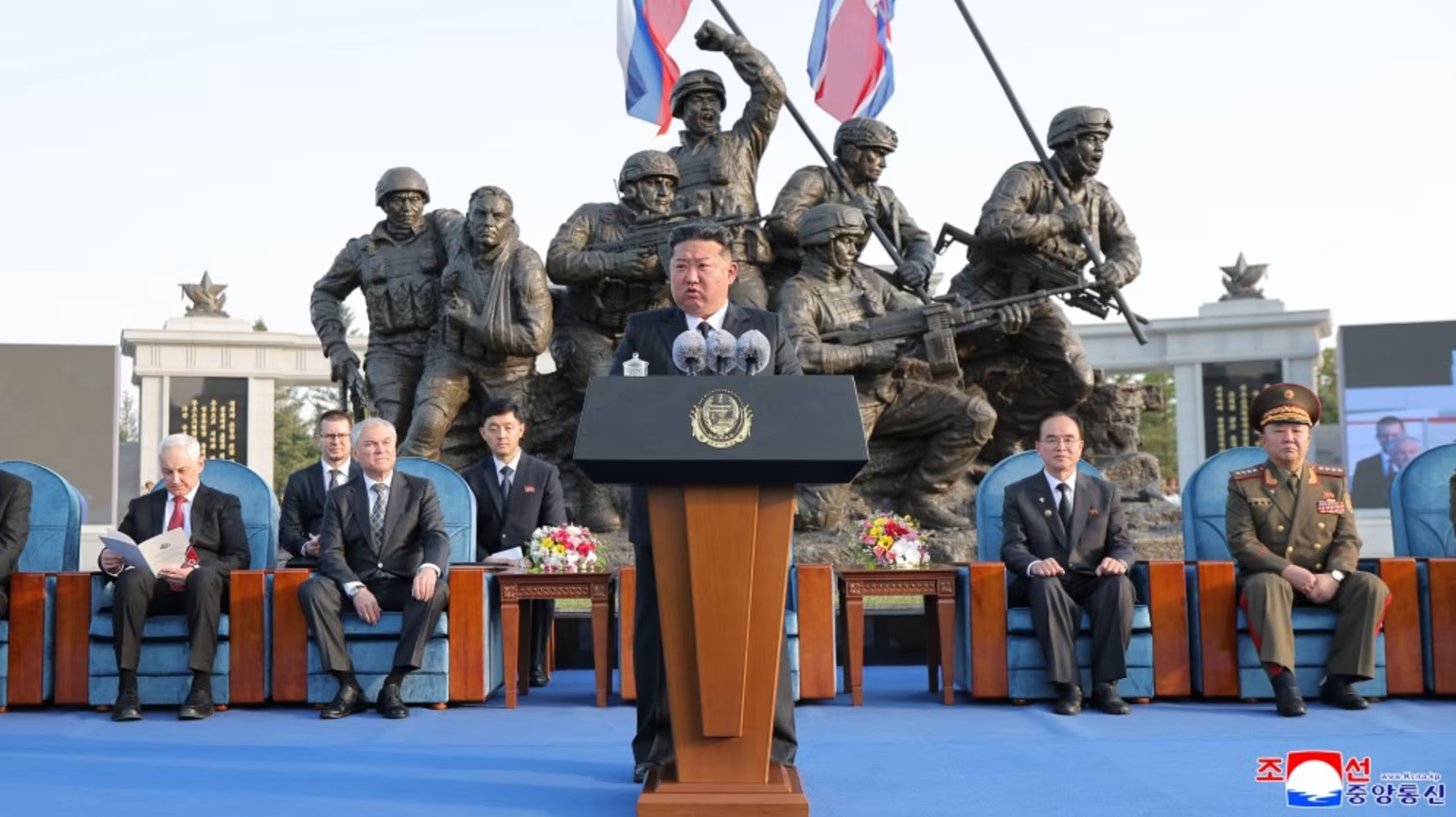

North Korean leader Kim Jong Un has openly praised soldiers who chose suicide over capture during combat, marking a rare and explicit acknowledgment of a long-suspected military doctrine. His remarks came during the unveiling of a large memorial complex dedicated to North Korean troops involved in the war alongside Vladimir Putin’s forces.
According to state media, Kim commended soldiers who “unhesitatingly opted for self-blasting,” referring to acts such as detonating grenades or explosives to avoid being taken prisoner. The statement is seen as a significant shift, as Pyongyang had previously avoided publicly confirming such practices despite years of reports from intelligence agencies and defectors.
The ceremony took place at a newly built memorial site on the outskirts of Pyongyang. The complex features bronze statues of North Korean and Russian soldiers, black marble walls inscribed with names, burial sites, and displays of personal belongings and battlefield relics. Kim was seen walking among graves and participating in symbolic burial rituals, reinforcing the narrative of sacrifice and loyalty.
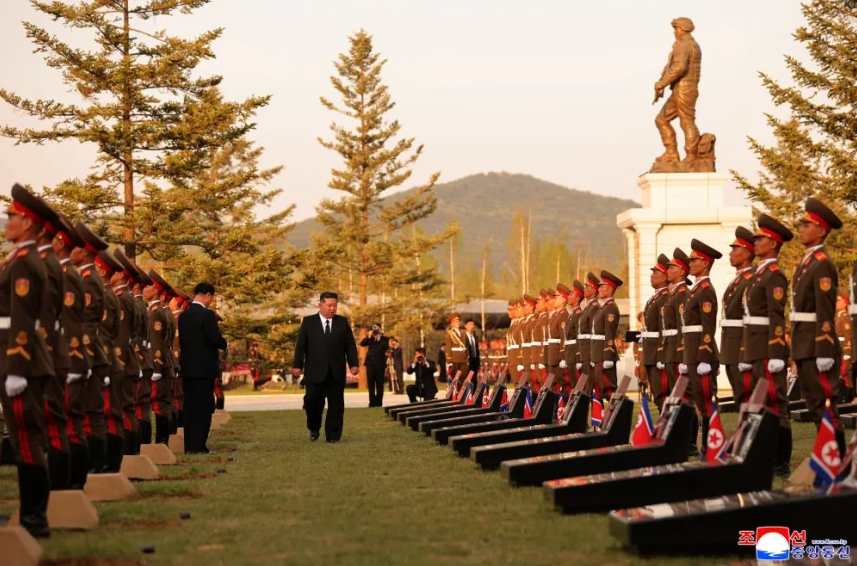
The memorial also provides insight into the scale of North Korea’s involvement in the conflict. Reports indicate that more than 2,200 names are listed on the walls, with hundreds of graves and additional space prepared for future casualties. This suggests ongoing military engagement rather than a concluded chapter.
Western and South Korean officials estimate that over 10,000 North Korean troops have been deployed to support Russian operations, particularly in contested regions. Thousands are believed to have been killed or wounded, although Pyongyang has only recently begun to publicly acknowledge such losses.
The event coincided with the anniversary of Russia’s claimed victory in a key battle zone, with Russian officials in attendance and a message from President Vladimir Putin read during the ceremony. The memorial also displayed captured military equipment, including Western-made tanks, though analysts question how directly North Korean forces obtained them.
The issue of captured North Korean soldiers adds another layer of complexity. Some captured troops have reportedly stated they were unaware they would be sent into combat until shortly before deployment. Under international law, prisoners of war are typically repatriated after conflicts, but concerns remain that returning them to North Korea could result in severe punishment.
South Korea has indicated it may accept defecting soldiers, raising potential legal and diplomatic challenges that could persist even after the war ends. The situation highlights not only North Korea’s growing role in the conflict but also the broader geopolitical implications of its alliance with Russia.