
Pakistan has formally approached the United Nations Security Council (UNSC), urging it to take notice of what it describes as India’s “brazen violations” of the Indus Waters Treaty (IWT), warning that New Delhi’s actions pose a serious threat to regional peace, water security, and economic stability.
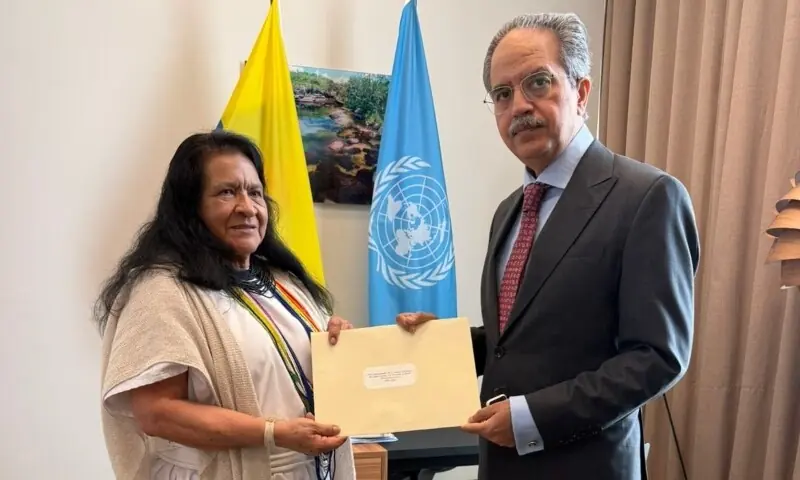
Deputy Prime Minister and Foreign Minister Ishaq Dar sent a letter to the UNSC through Pakistan’s Permanent Representative to the UN, Asim Iftikhar Ahmad.
According to Pakistan, India is pursuing two infrastructure projects linked to the Chenab River system that could divert water flows governed under the Indus Waters Treaty. Islamabad argues that these projects demonstrate an intention to alter the agreed distribution of water resources and effectively “weaponise water” against Pakistan.
Pakistan has asked the Security Council to take cognisance of the situation and hold India accountable for actions it says threaten water, food and economic security for millions of people.
The dispute comes amid growing tensions over the Indus Waters Treaty, a landmark water-sharing agreement brokered by the World Bank in 1960. Under the treaty, the eastern rivers — Ravi, Beas and Sutlej — are allocated to India, while Pakistan has primary rights over the western rivers — Indus, Jhelum and Chenab.
Islamabad says India’s decision in 2025 to place the treaty in abeyance violated international law and undermined one of South Asia’s most enduring agreements.
Pakistan has also cited rulings from the Permanent Court of Arbitration, which stated that India could not unilaterally suspend the treaty and affirmed limitations on India’s ability to control water flows on the western rivers.
A major point of concern is India’s proposed Chenab-Beas Link Project, which aims to divert water from the Chenab River into the Beas basin. Pakistani officials have described the project as a grave violation of the treaty and broader international water laws.
India, meanwhile, maintains that it will continue reviewing its treaty commitments until Pakistan addresses concerns regarding cross-border terrorism allegations, which Islamabad strongly rejects.
The latest diplomatic move reflects increasing concerns that water disputes could become a major source of tension between the two nuclear-armed neighbours if a negotiated solution is not found.