
SBP Warns Middle East War Poses Risks Despite Improved Economic Stability in FY26
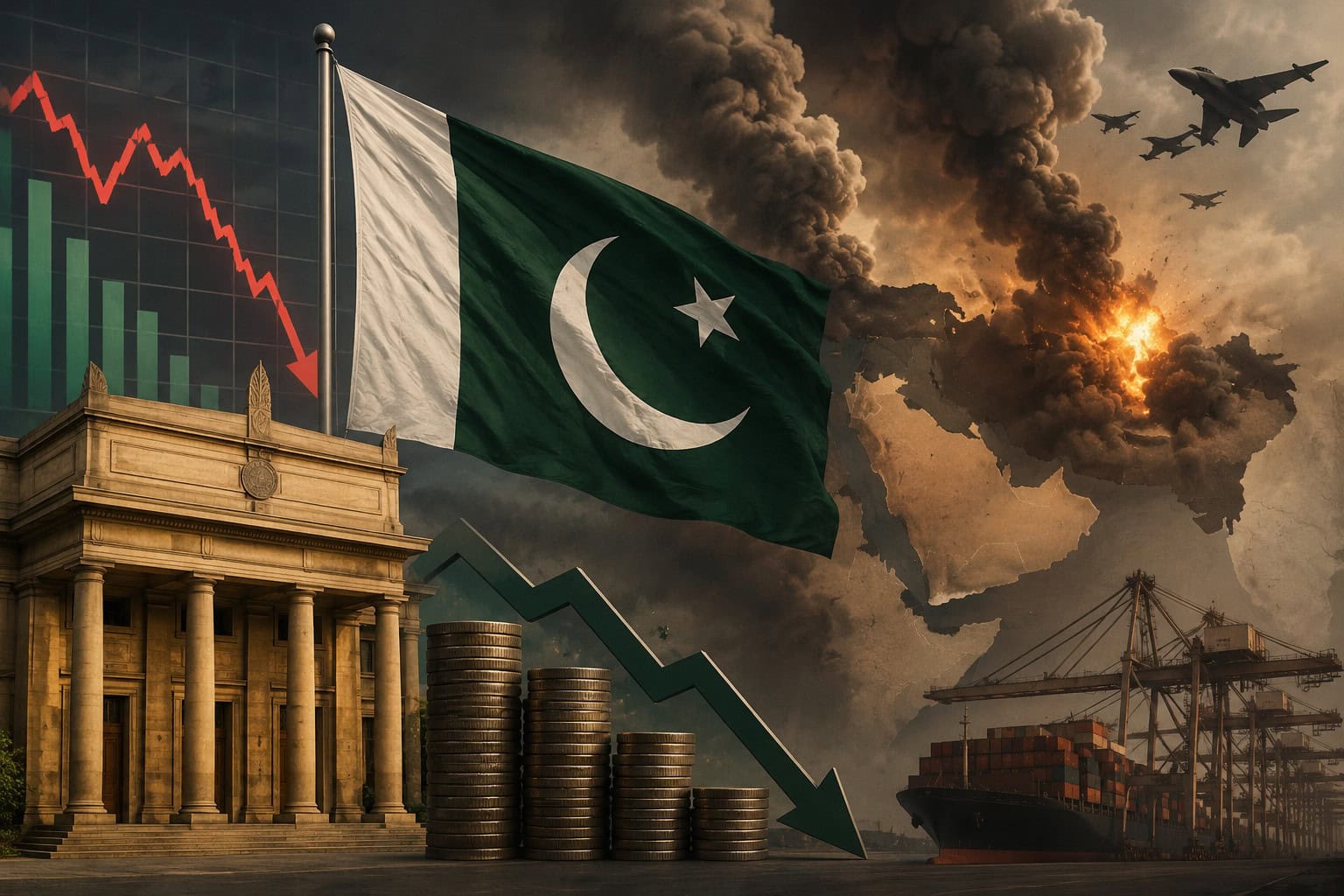
The State Bank of Pakistan (SBP) has reported improved macroeconomic stability in the first half of fiscal year 2026, but warned that the ongoing war in the Middle East poses significant risks to Pakistan’s economic outlook.
In its Half Year Report 2025-26 released on Tuesday, the central bank said economic conditions strengthened due to prudent policies, structural reforms, and external support, but rising global uncertainty could disrupt this progress.
Rising External Risks from Global Conflict
The SBP said the Middle East conflict could impact Pakistan through supply chain disruptions, higher global commodity prices, and pressure on inflation, trade, remittances, and overall economic activity.
It projected real GDP growth to remain near the lower end of the previously estimated 3.75% to 4.75% range for FY26.
The current account deficit is expected to stay within the lower range of earlier projections (0% to 1% of GDP), but inflation risks remain elevated due to potential increases in international oil prices.
Inflation and External Stability
The report noted that average inflation eased significantly during the first half of FY26, with NCPI inflation averaging 5.2%, nearly two percentage points lower than the same period last year.
Improved foreign exchange inflows and SBP interventions helped strengthen external reserves, while workers’ remittances continued to play a key role in supporting Pakistan’s external account.
The central bank credited prudent monetary and fiscal policies, alongside IMF-backed reforms, for the overall stability.
Growth Momentum and Fiscal Performance
According to the SBP, Pakistan’s GDP grew at nearly twice the rate recorded in the same period last year, driven mainly by industrial activity, followed by services and agriculture.
The report also highlighted a significant fiscal improvement, noting that Pakistan recorded a fiscal surplus in the first half of FY26—the first such surplus since FY2002—supported by lower interest payments and fiscal consolidation.
Structural Challenges Remain
Despite short-term improvements, the SBP warned that long-term stability depends on structural reforms. Key challenges include:
- Low national savings and investment
- Weak export competitiveness
- Declining foreign direct investment
- Low tax-to-GDP ratio
The report stressed that without addressing these issues, sustained high growth will remain difficult.
Climate Change Risks Highlighted
A dedicated section of the report warned that Pakistan remains highly vulnerable to climate change despite contributing minimally to global emissions.
The country is ranked among the 15 most climate-affected nations globally but has low preparedness to deal with climate shocks, increasing risks to its economy.
The SBP also pointed to Pakistan’s carbon-intensive growth structure and the urgent need for investment in climate mitigation and adaptation, which remains insufficient due to limited funding.
Outlook
While Pakistan’s economic indicators have improved, the SBP emphasized that the external environment—particularly the Middle East conflict—adds uncertainty to the outlook.
The central bank reiterated that maintaining stability will require continued prudent policy management and deep structural reforms to ensure long-term sustainable growth.