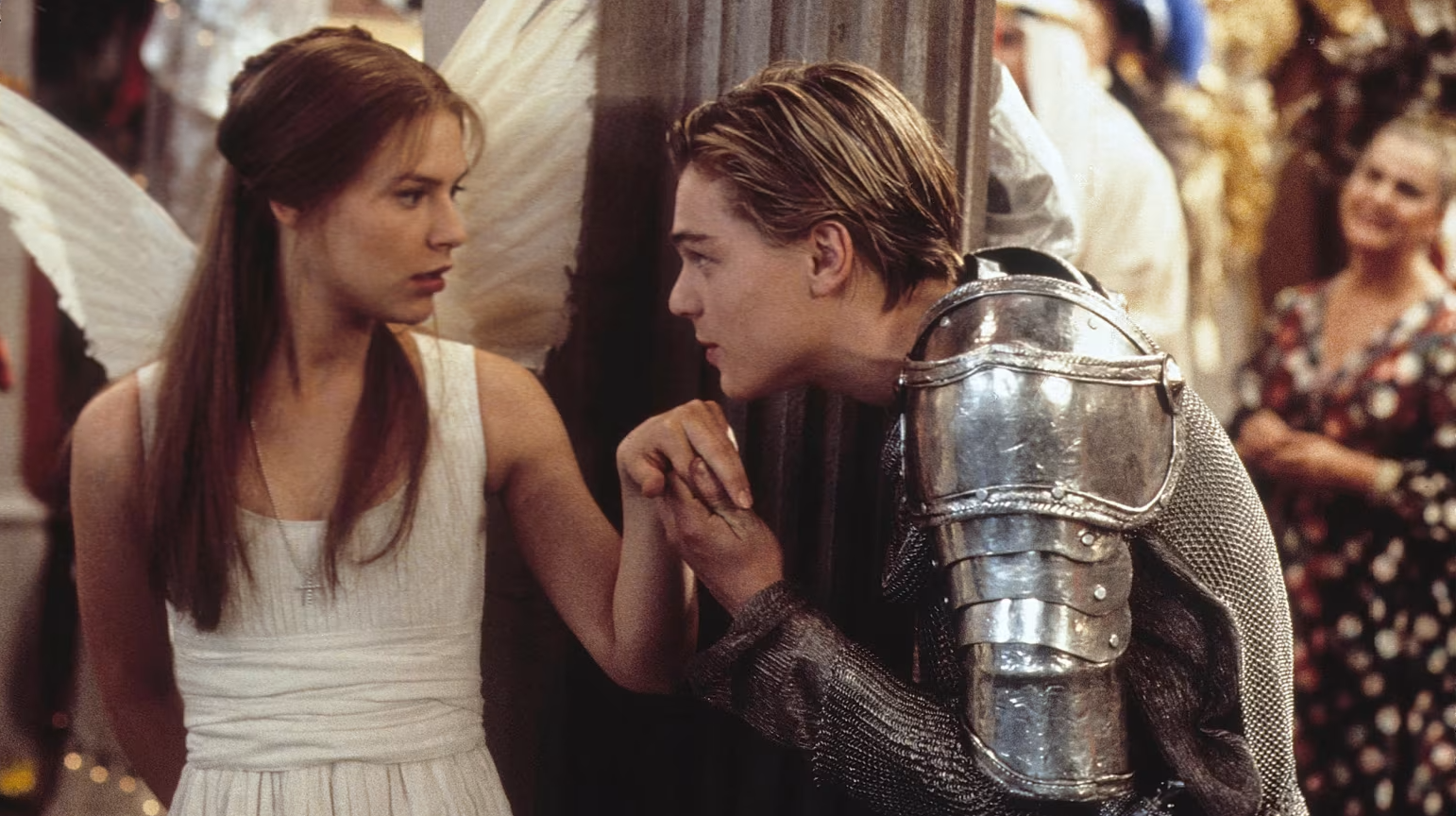

The image is instantly recognizable: a moody, stylized Romeo appears against an orange sky, cigarette smoke drifting through the air as Radiohead’s “Talk Show Host” sets a brooding tone. Leonardo DiCaprio’s 21-year-old face becomes iconic in a single frame, launching countless teenage obsessions.
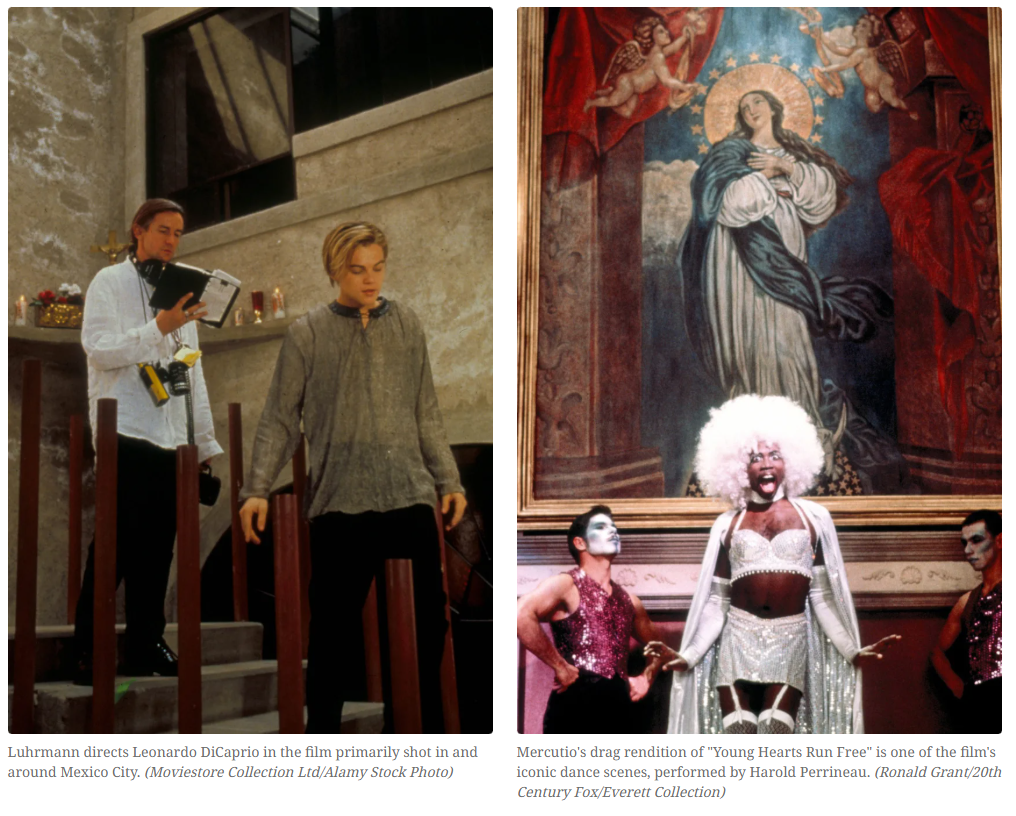
It is 1996, and Baz Luhrmann’s “Romeo + Juliet” has transformed Shakespeare’s tragedy into an MTV-era spectacle. Set in a neon-soaked Venice Beach-style Verona, the film replaces swords with guns, while Romeo and Juliet fall in love in a world of chaos, music, and modern rebellion.
But what truly elevated the film into cultural memory was its soundtrack — a carefully curated mix of 1990s musical identity. Songs like Des’ree’s “Kissing You,” The Cardigans’ “Lovefool,” Garbage’s “#1 Crush,” and Radiohead’s haunting “Exit Music (for a Film)” turned the movie into an emotional experience that extended far beyond the cinema.
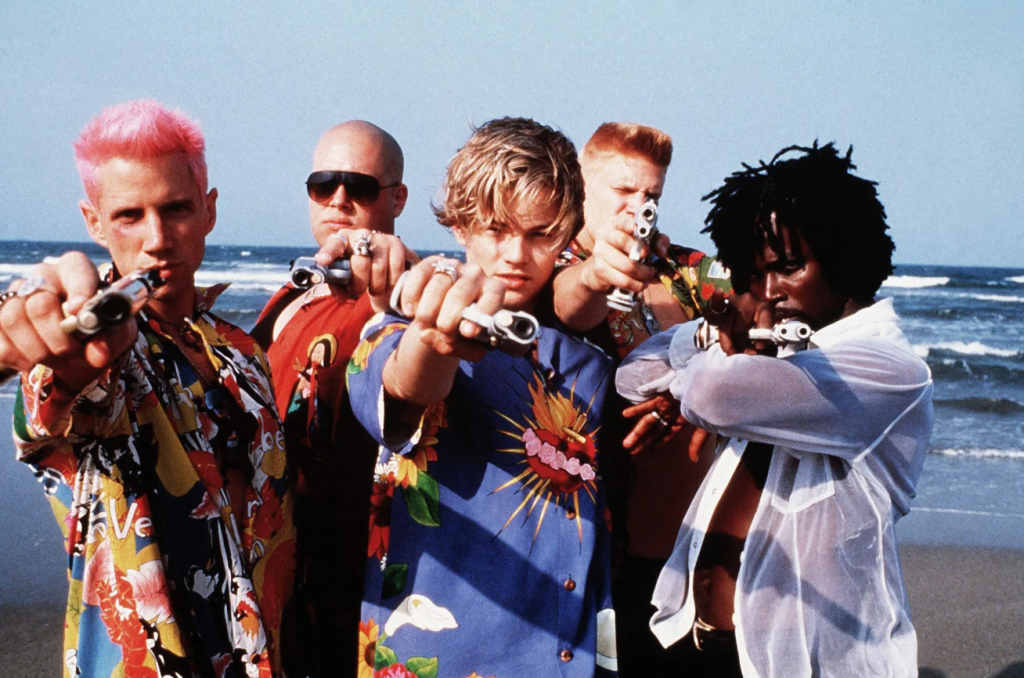
During the 1990s, movie soundtracks were not just background scores — they were cultural products in their own right. CDs were cheap to produce and highly profitable, and record labels invested heavily in securing rights for films. Soundtracks became commercial powerhouses, often spawning global hit singles.
Films such as “The Bodyguard,” “Titanic,” “Trainspotting,” “Dangerous Minds,” “Good Will Hunting,” and “Cruel Intentions” all demonstrated the same phenomenon: music and cinema were deeply intertwined. Whitney Houston’s “I Will Always Love You” and Celine Dion’s “My Heart Will Go On” became global anthems, while curated compilations turned films into long-lasting musical experiences.
Music producers like Nellee Hooper, Craig Armstrong, and Marius de Vries helped shape the “Romeo + Juliet” soundtrack into a hybrid of orchestral scoring and contemporary pop. The film famously blurred boundaries between genres, treating classical compositions and modern tracks with equal artistic weight.
Hooper’s approach to selection was experimental and immersive, often testing songs in informal listening sessions before finalizing tracks for films. This process helped create soundtracks that felt alive, youthful, and emotionally charged — designed to resonate with audiences beyond the screen.
The era also saw original music written specifically for films, creating exclusive songs that existed only within soundtracks. This exclusivity turned albums into collectibles, driving fans to purchase CDs to relive the film experience.
Industry experts say this period marked a rare moment when independent music, mainstream pop, and cinema converged. The rise of bands like Nirvana and the success of alternative music meant that underground sounds were entering Hollywood productions at scale.
However, the digital streaming era eventually changed this dynamic. As music consumption shifted online, soundtracks lost their dominance as standalone cultural products. Instead, individual “music moments” within films or TV shows became more common rather than full curated albums.
Despite this shift, nostalgia for 1990s soundtracks remains strong. Podcasts, retrospectives, and anniversary releases continue to celebrate the decade as a golden age where film and music worked in harmony to shape identity, emotion, and memory.
For many who grew up during that era, these soundtracks are more than music — they are emotional time capsules. Whether it is Romeo’s first appearance on screen or the final notes of a heartbreak ballad, the 1990s proved that movies didn’t just tell stories — they sounded like them.