
WASHINGTON: The United States is reportedly considering a bold and risky military plan to seize Iran’s enriched uranium stockpile, as part of efforts to stop the country from developing nuclear weapons.
According to reports, President Donald Trump is reviewing different military options. One of the most extreme possibilities involves sending US troops into Iran to capture nuclear material stored deep underground.
Military experts warn that such an operation would be highly complex, dangerous, and could take days or even weeks to complete.
A former US defence official, Mick Mulroy, described it as potentially “one of the most complicated special operations in history.”
⚠️ Why the Operation is So Difficult
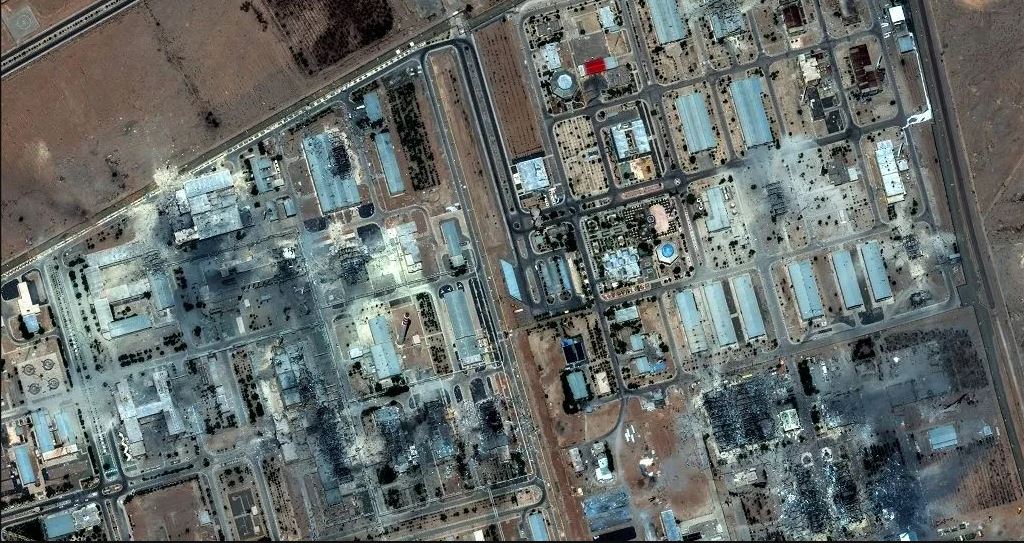
Iran’s enriched uranium is stored in heavily protected underground facilities, making it very hard to access. Key locations include nuclear sites in Isfahan, Fordo, and Natanz.


7
Experts say one major challenge is simply knowing where all the uranium is located. If the material is spread across multiple sites, the mission becomes much more complicated.
At the start of the conflict, Iran was believed to have:
- About 440 kg of uranium enriched to 60%
- Around 1,000 kg enriched to 20%
- And 8,500 kg at lower enrichment levels
Highly enriched uranium can quickly be turned into weapons-grade material, making it a key target.
🪖 Need for Ground Troops
Unlike airstrikes, experts say this mission cannot be completed without sending troops on the ground.
The US could deploy units like the 82nd Airborne Division to secure areas around nuclear sites. Special forces trained in handling nuclear material would then enter underground tunnels to retrieve the uranium.
However, the entrances to these facilities may be blocked or damaged, requiring heavy machinery to dig through debris — all while facing possible attacks from Iranian forces.
🚨 Major Risks Involved
Experts highlight several serious dangers:
- Deep underground sites: Facilities are buried and protected, making access extremely difficult
- Unknown locations: Uranium may be hidden in multiple secret sites
- Enemy response: Iranian forces could launch counterattacks
- Isolation: US troops would be operating far inside Iran, making rescue or evacuation difficult
- Transport challenge: Moving radioactive material safely out of the country is complex
Jason Campbell explained that troops would face “constant threat” while trying to locate and secure the uranium.
🔄 What Happens After Seizing Uranium?
Even if the US successfully captures the material, another challenge remains — what to do with it.
Options include:
- Removing it from Iran for processing elsewhere
- Diluting it on-site to reduce its nuclear capability
Experts say both options are difficult and time-consuming.
Jonathan Ruhe noted that handling such a large quantity of uranium — nearly half a ton — adds another layer of complexity.
🌍 Political and Strategic Impact
The operation is just one of several strategies under consideration. Others include targeting key infrastructure like oil routes to pressure Iran into negotiations.
However, analysts believe even discussing such a mission could be a way to increase pressure on Iran rather than a guaranteed plan of action.
According to Rafael Grossi, full details about Iran’s nuclear stockpile remain unclear because international inspectors have not been able to access sites recently.
⚖️ Conclusion
While seizing Iran’s uranium could significantly weaken its nuclear capabilities, experts agree that the risks are extremely high.
The mission would involve complex logistics, dangerous conditions, and uncertain outcomes. As one expert put it, there are “a million things that could go wrong.”
For now, the decision remains under consideration, but it highlights how serious and sensitive the situation has become in the ongoing conflict.